

Not every student preparing for the digital SAT can spare long hours each day. Many are juggling AP classes, demanding homework, club responsibilities, sports commitments, and sometimes even part-time work. Add the stress of college admissions, and finding time for SAT study becomes even harder. Fortunately, a carefully structured online sat study schedule can help students prepare efficiently without burning out.
The benefit of online tools is flexibility. Instead of forcing students into rigid routines, digital prep programs allow them to study in small, meaningful study blocks and complete practice tests whenever their schedule allows. In this guide, you will find realistic SAT study plan options for busy teens along with tips for building a sustainable study schedule that works during the school year. Whether you're starting months in advance or preparing for a last-minute test date, the right structure can make your entire sat prep journey more manageable.

For most students, the school year is already packed. Homework piles up. AP timelines feel tight. Extracurricular activities often leave very little breathing room. This is why busy students don’t need longer hours. They need an effective SAT study plan that respects their time and energy.
A rigid routine rarely works for teenagers who are already stretched thin. A flexible system, on the other hand, allows them to prepare for the sat exam strategically, incorporating all the material they need without overwhelming themselves. The goal is small, consistent gains that fit around existing responsibilities.
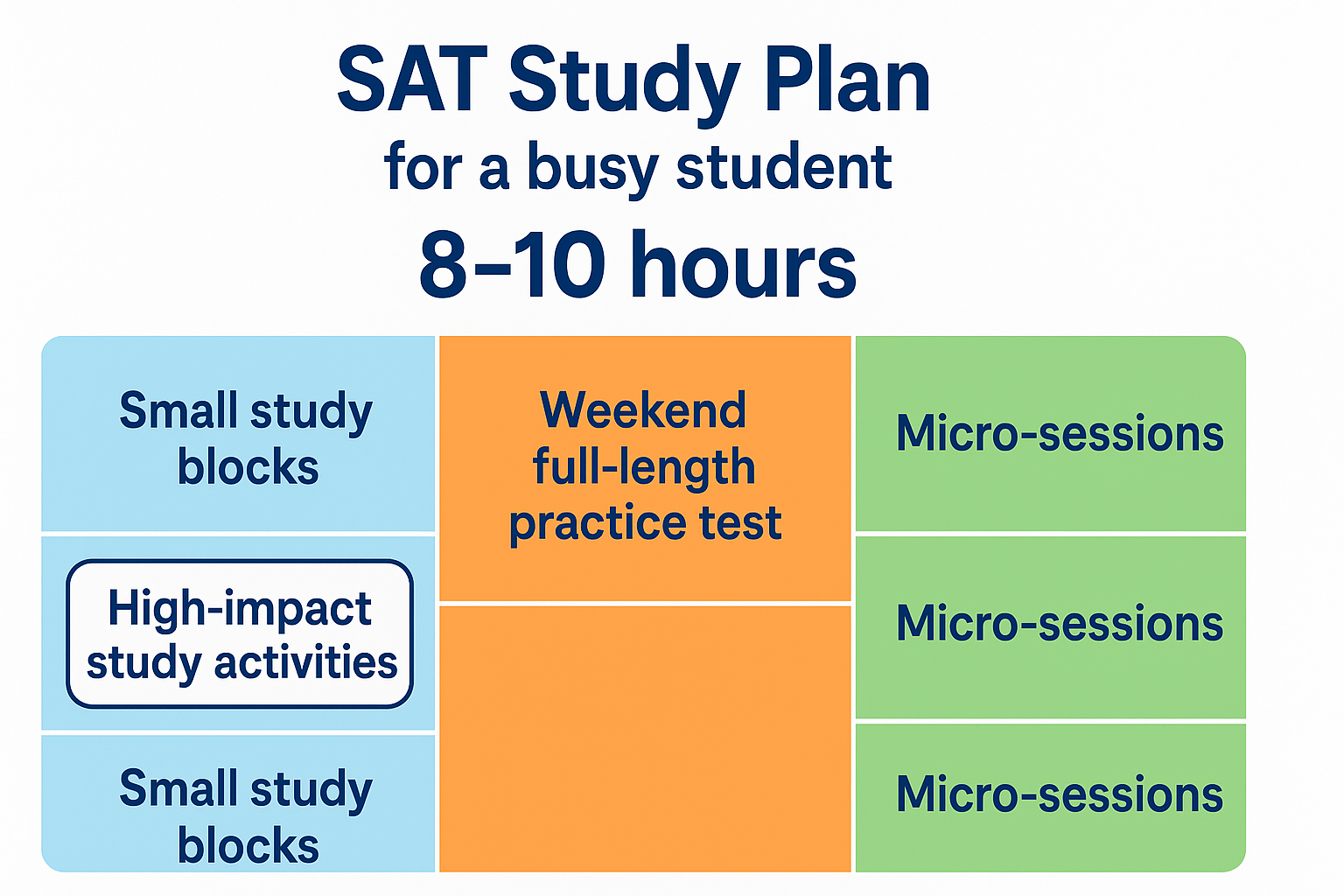
Success on the real SAT isn’t only about cramming for hours on end. It’s about structured, high-impact study. Short, deliberate sessions help students:
Busy students benefit most from intentional study blocks because they prevent wasted effort. Instead of casually hopping through study materials, students work with purpose, improve steadily, and minimize burnout.
A good SAT study schedule adapts to the student’s life, not the other way around. Online platforms make it easy to study:
This level of flexibility allows students to “stack” smaller sessions, steadily building confidence for test day without feeling pressured.
Efficiency matters far more than duration. The most productive online sessions last between 25 and 40 minutes. These focused blocks help students move through practice questions without mental fatigue. Short sessions also allow for:
When time is tight, high-impact sessions are the backbone of an effective sat preparation plan.
Digital platforms keep busy students on track. Tools like timers, mobile reminders, study analytics, and online test prep courses make the entire process smoother. Students can:
These tools turn the sat prep plan into a structured routine rather than guesswork.
Not every student begins preparing at the same moment. Some start preparing during sophomore year. Others begin in junior year. Some take their first practice test early; others don’t discover their baseline score until much later.
Below are three realistic plans based on how much time is available before the test date.
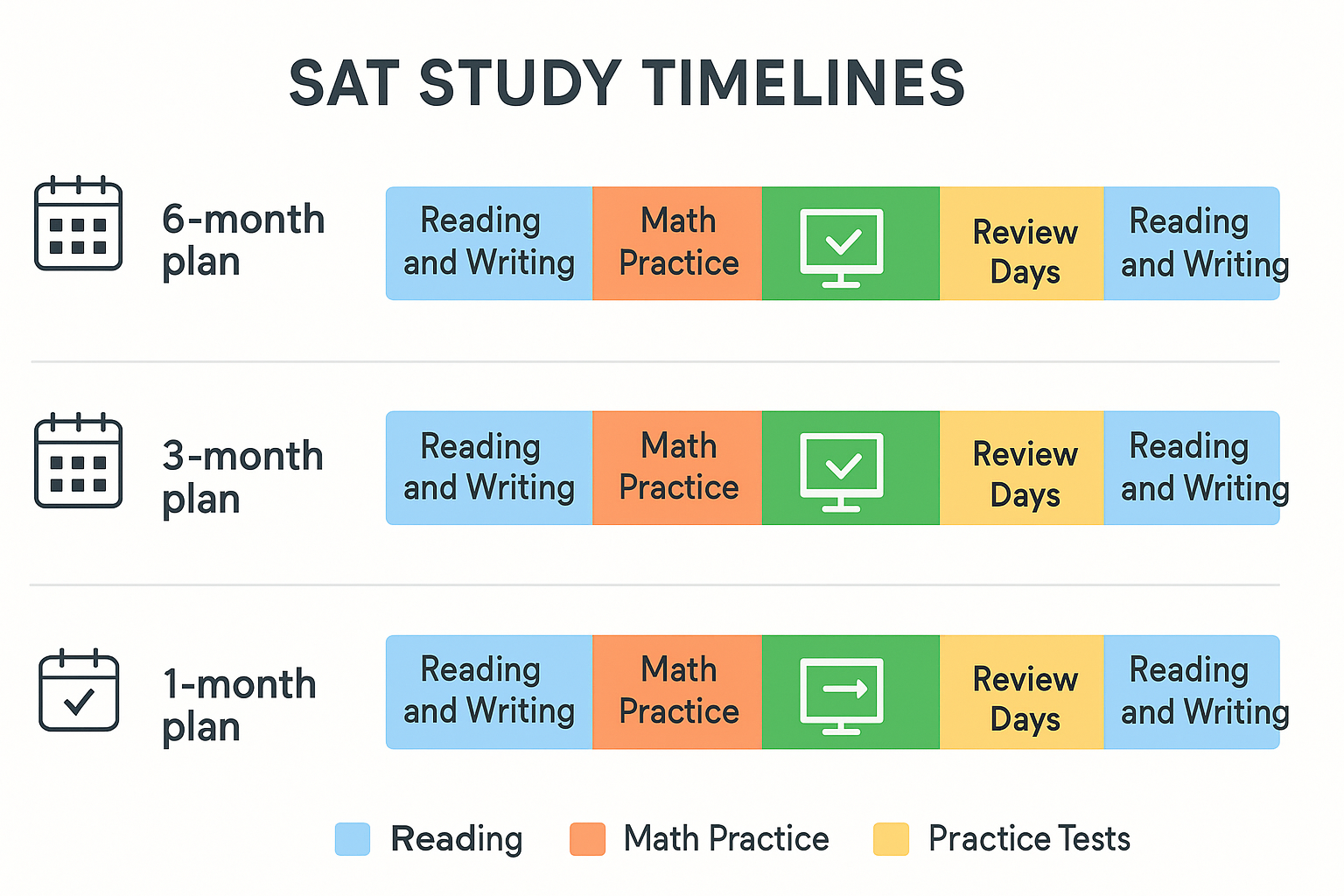
A six-month timeline is the most comfortable option. It allows gradual improvement, deeper learning, and multiple chances to take an official sat practice test from the college board website. This plan works especially well during a busy school year.
A typical six-month plan includes:
Month 1:
Months 2–3:
Months 4–5:
Month 6:
This structure gives students time to work through all the material without stress.
A three-month online SAT study schedule works well for juniors and seniors balancing schoolwork, AP assignments, and extracurriculars. This SAT study plan relies on steady weekly routines rather than long daily sessions. In Month 1, students begin with a diagnostic test to identify strengths and weaknesses, followed by short lessons that review key concepts in reading and writing, advanced math, and data analysis.
Month 2 introduces weekly practice tests along with targeted review sessions. At this stage, students focus on breaking down answer explanations, learning test-taking strategies, and reviewing errors to understand why certain responses were the correct answers.
The final month increases intensity slightly, using full-length practice tests from official SAT practice or Bluebook. The goal is to simulate the real SAT exam, refine pacing, and raise the baseline score toward your target score before the official test date.
A one-month SAT prep plan is suitable for retakes or last-minute preparation. Since time is limited, this schedule relies heavily on daily consistency. Students begin by taking a first practice test to establish a baseline SAT score. Then each study day is organized into short, high-impact blocks: one session for practice questions, one for concept review, and one mini-session for timed drills.
The final two weeks revolve around full-length practice tests, reviewing detailed answer explanations, and improving speed on both modules. Because this plan is fast-paced, it requires discipline, smart prioritization, and clear focus on weaker areas to ensure strong performance on the actual SAT.
Weekly plans help busy learners form a realistic routine. Whether you have 4 hours or 10 hours per week, you can build an effective SAT study plan that fits your lifestyle.
This weekly study schedule supports steady improvement without overwhelming students.
Breakdown:
This plan maintains consistent progress while leaving room for sports, clubs, or a heavy school year workload.
When students barely have time due to projects, AP classes, or part-time jobs, this minimal SAT study plan keeps prep manageable.
Plan Overview:
Even with this limited schedule, students still build familiarity and confidence for test day.
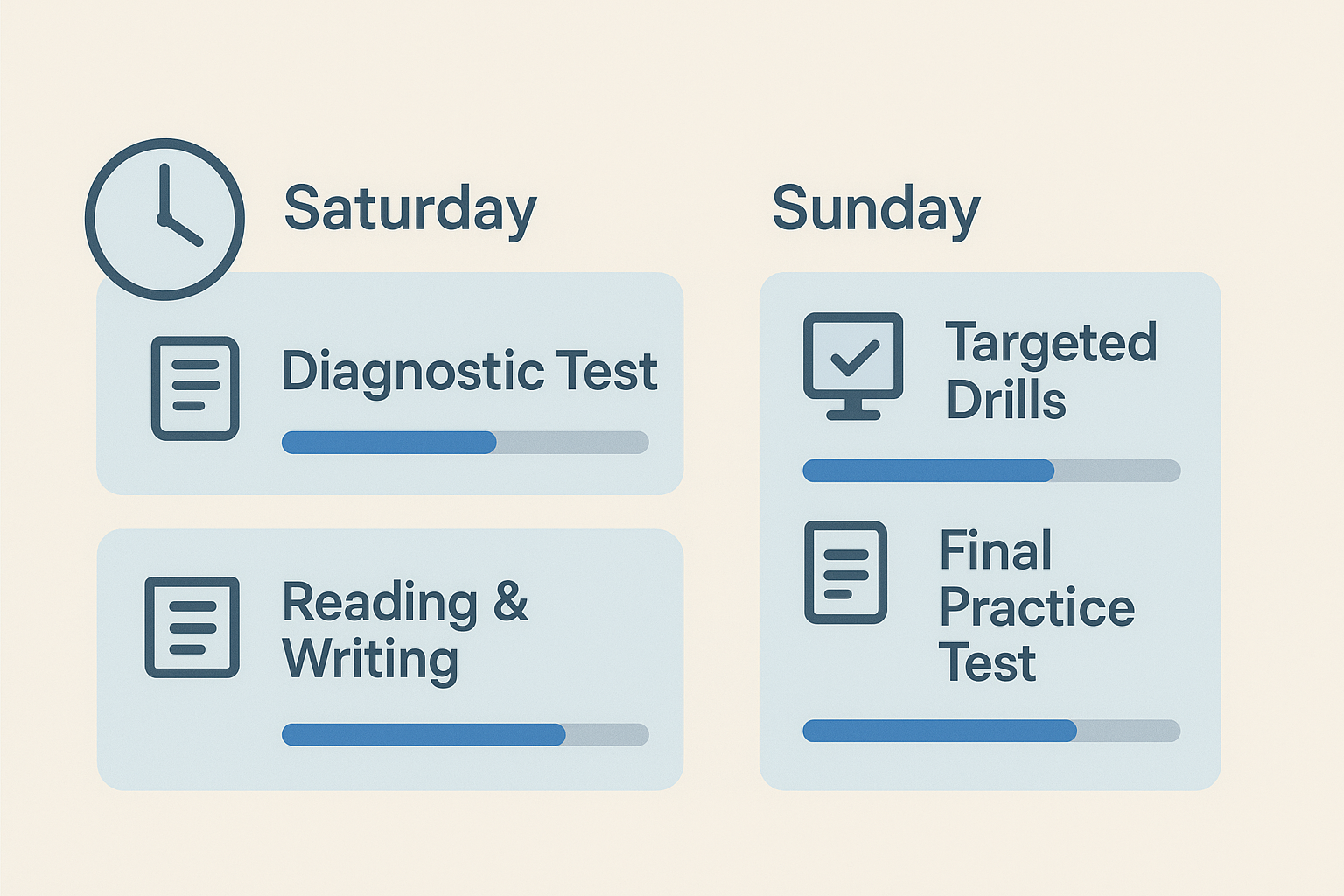
For students who are fully booked Monday through Friday, a weekend-only SAT study schedule can still be effective.
Saturday:
Sunday:
This approach allows consistent progress without weekday pressure.
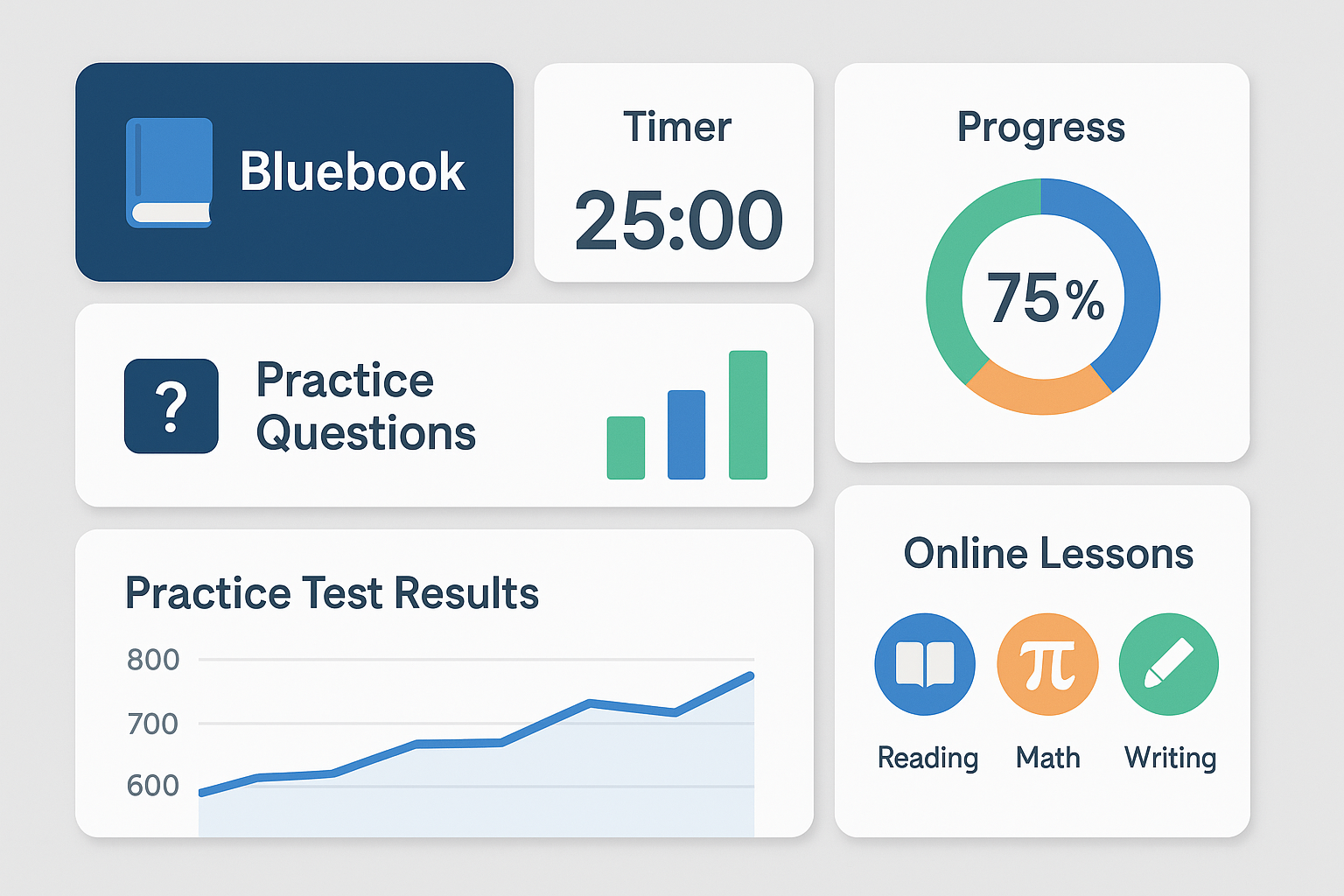
Digital platforms simplify SAT prep for busy learners who need flexibility, structure, and instant feedback.
The Bluebook app is essential for those preparing for the digital SAT. It includes official SAT practice tests, auto-timers, and performance insights that reveal your strengths and weaknesses. Practicing in the same format as the actual SAT helps reduce anxiety and improves familiarity with the test interface.
Online courses offer structured learning with flexibility. They break down tough math concepts, writing rules, and reading strategies into short video lessons so you can study anytime. These courses are especially helpful for busy students who need guidance but can’t commit to long coaching sessions.
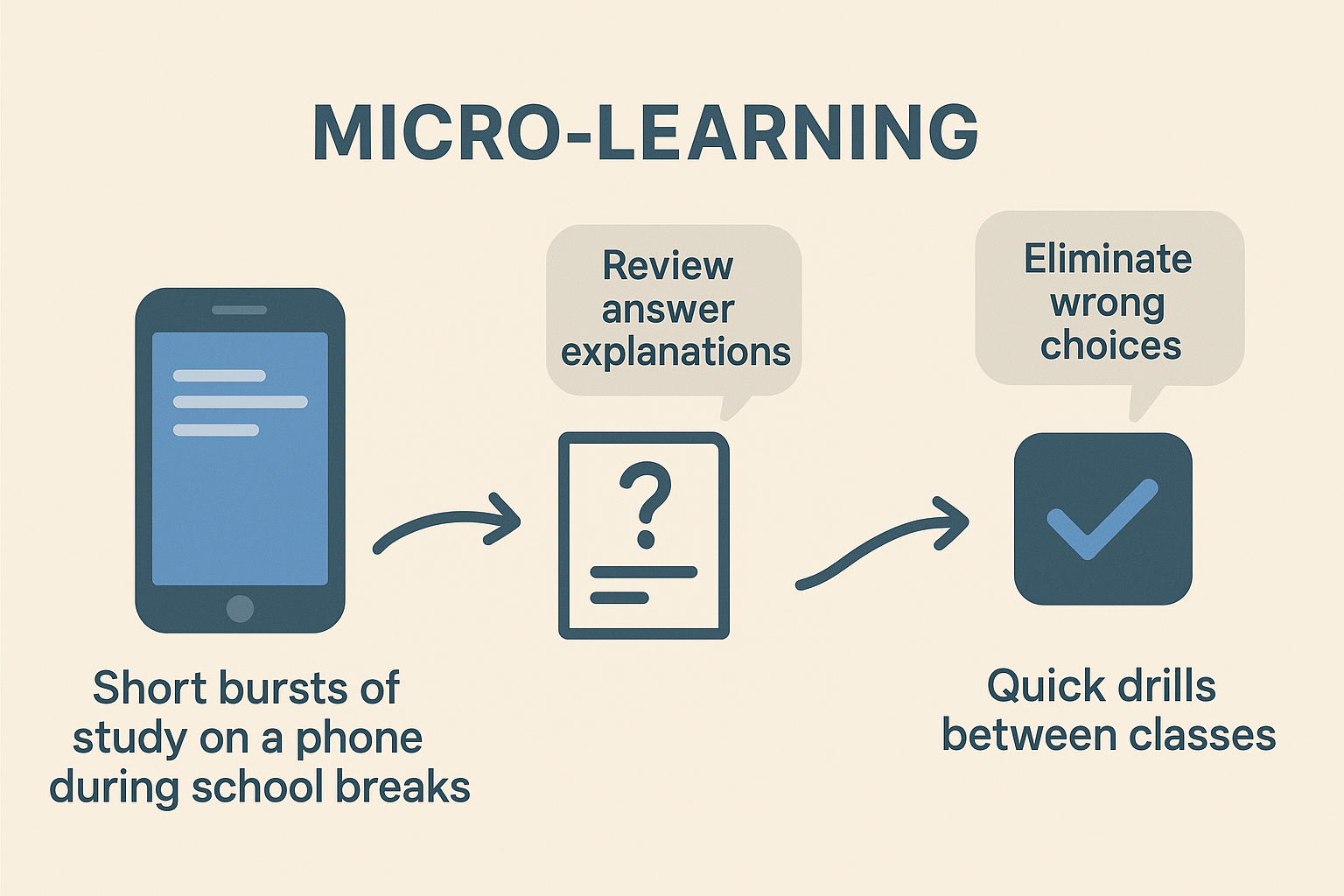
AI-powered platforms like ChatGPT and adaptive study apps create instant drills, summaries, and answer explanations based on your performance. They’re ideal for short study sessions when you’re between classes or traveling. These tools also personalize your SAT prep journey, making your routine both efficient and convenient.
Busy students thrive when they use smart, time-efficient strategies to maximize their results.
Short 10-minute sessions during lunch or the bus ride home can significantly increase your weekly study time. Even brief practice improves familiarity with SAT questions and boosts retention of writing concepts and math formulas.
Instead of practicing your strongest topics repeatedly, dedicate more time to areas where your accuracy is low. This is where most students’ test scores improve dramatically.
You can merge schoolwork with your SAT study. English reading can double as reading and writing section practice. Math homework often overlaps with SAT math section topics. This saves time and reinforces concepts naturally.
Consistency matters more than the number of hours you study. These habits help you stay focused long-term.
Weekly goals keep you accountable. Mini-quizzes help reinforce new concepts and highlight areas that need additional review.
Reviewing your practice test results helps you determine whether your current study plan is working. Adjusting based on data ensures no time is wasted.
Burnout affects accuracy and pacing. Include rest days, mix up study activities, and keep your sessions short. A sustainable routine strengthens long-term performance.
Yes. Even with limited time, steady progress is possible if your SAT study plan is organized and consistent. Using short sessions to review mistakes from practice tests, focusing on weak areas, and completing at least one official SAT practice test every two weeks can help you see measurable gains. The key is treating those few hours as focused, distraction-free blocks. Many students studying for the SAT improve significantly this way before test day.
Juniors balancing AP classes and activities benefit most from a long-term, low-stress routine. A 3–6 month SAT study timeline with 6–8 weekly hours allows enough time for concept review, targeted drills, and regular practice tests without feeling overloaded. A structured plan using online lessons and the best SAT study plan ensures that students gradually build confidence in all areas the SAT consists of. This approach keeps prep manageable while strengthening performance on the SAT test.
Yes, especially for retakers or students who already have some familiarity with the test. A one-month SAT prep plan works when each study block has purpose—daily review sessions, timed sections, and multiple practice tests spread throughout the month. Completing at least one official SAT practice test each week helps you adapt to pacing and question style. Since studying for the SAT in a compressed timeline requires discipline, focus on high-yield topics and full simulation before test day.


