

We've been working with countless students, and one thing is crystal clear: the move to the digital SAT has changed the prep game entirely. We've watched bright, capable kids stumble not because they lack solid math skills, but because their study strategies haven't adapted to the new format. This guide is your essential roadmap, a set of actionable tips and proven practice routines, to help you navigate the digital SAT math section with confidence and secure the high score you deserve for your dream college.
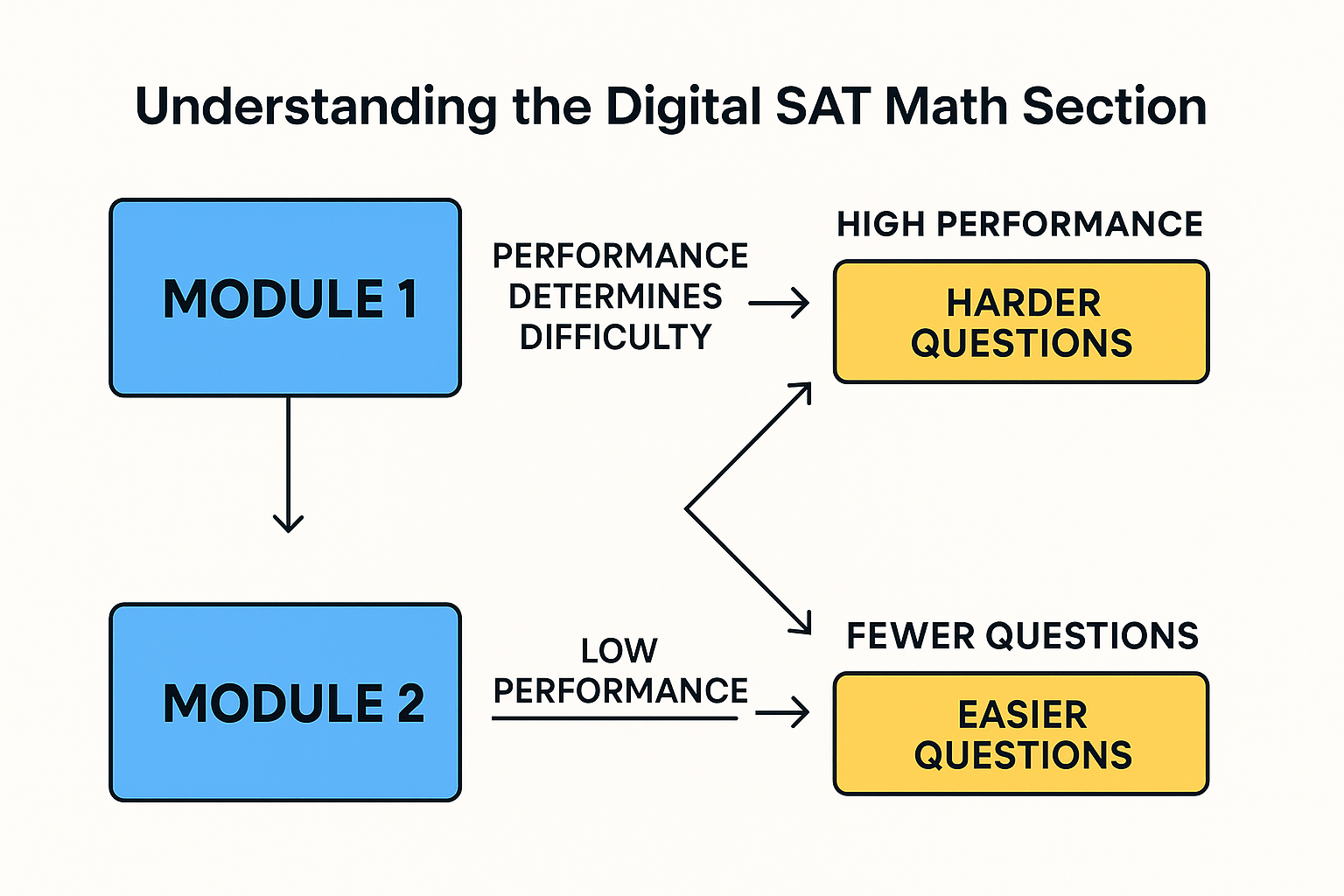
The structure is adaptive, which is just a fancy way of saying the test actually learns and reacts to you in real-time. Module 1 gives you a fair mix of easier and medium math questions; it's essentially the test taking your measure, sizing you up.
Think of it like the College Board is saying, "Prove yourself."
If you absolutely crush Module 1, the test recognizes your strength immediately and ups the ante, delivering a second module stacked with more challenging math questions. This isn't some secret mind-game; it’s a personalized approach designed to measure your mathematical ability more accurately and efficiently than any static test ever could. You earn the tough problems, and the big points that come with them!
When you truly rock that first module, it rewards you by presenting those difficult advanced math problems in the second test module. If you struggle, the second module simply scales back to match your current level; the system is always trying to find your sweet spot.
This leads to the biggest, most common question we hear constantly: "Should I intentionally get some answers wrong in Module 1 to get easier math questions later?"
Let’s be clear: the answer is a definitive no. The scoring algorithm is seriously sophisticated and totally accounts for question difficulty level. The harder math questions in the second module are worth way more points, contributing far more to a high final score than easier math questions ever could. Your job is to focus entirely on accuracy and demonstrating your maximum knowledge, not on trying to game the system. That's a strategy that guarantees a lower score. Don't even try it!
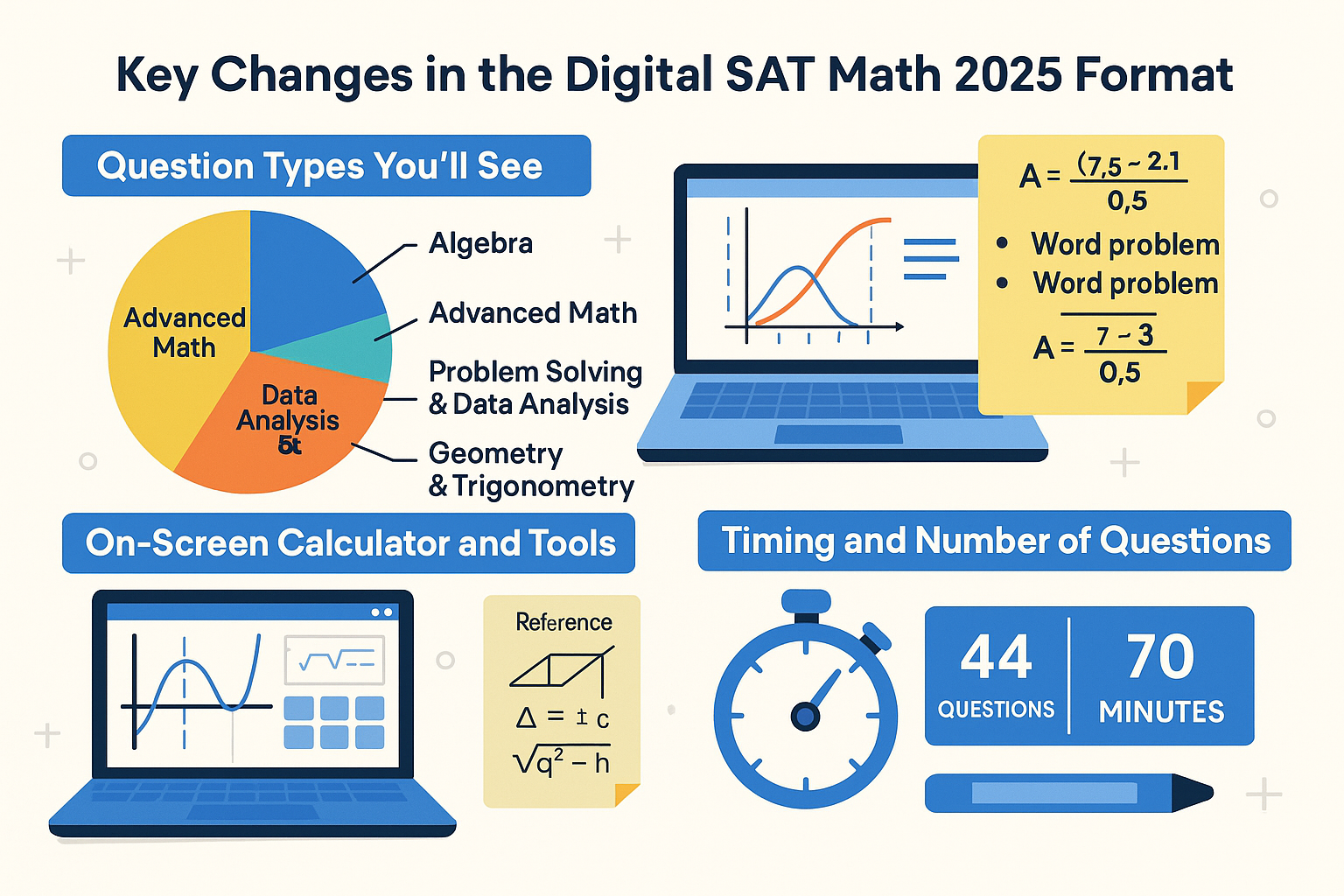
The math tested spans four core areas: Algebra (the biggest piece of the pie, hands down), Advanced Math (equations, functions, etc.), Problem Solving and Data Analysis, and Geometry and Trigonometry. The College Board is obsessed with real-world scenarios now, so expect tons of lengthy word problems and graph-based items that force you to connect mathematical concepts to situations from social studies, science, and everyday life.
Data analysis geometry questions have also become a massive feature, meaning you'll need to interpret visual information and statistical reasoning. The digital format allows for much more complex interactions, like analyzing dynamic charts or graphs that really test your deep understanding of how data actually works.
Here is your biggest advantage, seriously: you get access to the powerful Desmos graphing calculator right there on-screen for the entire math section. This is a game-changer compared to the old structure. Desmos is a sophisticated tool capable of graphing complex functions and visualizing relationships in ways a basic calculator never could. You should be fluent in it; it’s a massive leverage point.
The digital format also includes a reference sheet of essential math formulas available at all times. This is huge! It eliminates the pressure to memorize every obscure trigonometric identity or geometric formula. You can also flag questions for review, which is critical for time management when you encounter a problem that you know you can crack with just a little more focus later on.
The SAT math test comprises 44 total questions over 70 minutes, which averages out to about 95 seconds per question. This pace feels relatively brisk, especially when you run into those complex problem-solving and data analysis math questions that demand real thought.
Here's the crucial warning: the digital format completely compartmentalizes the math section. Once you hit that submit button on Module 1, you cannot return to those math questions. Seriously, this is not the old test. This makes strategic pace-setting and careful review within each module absolutely essential. You don't get a do-over.
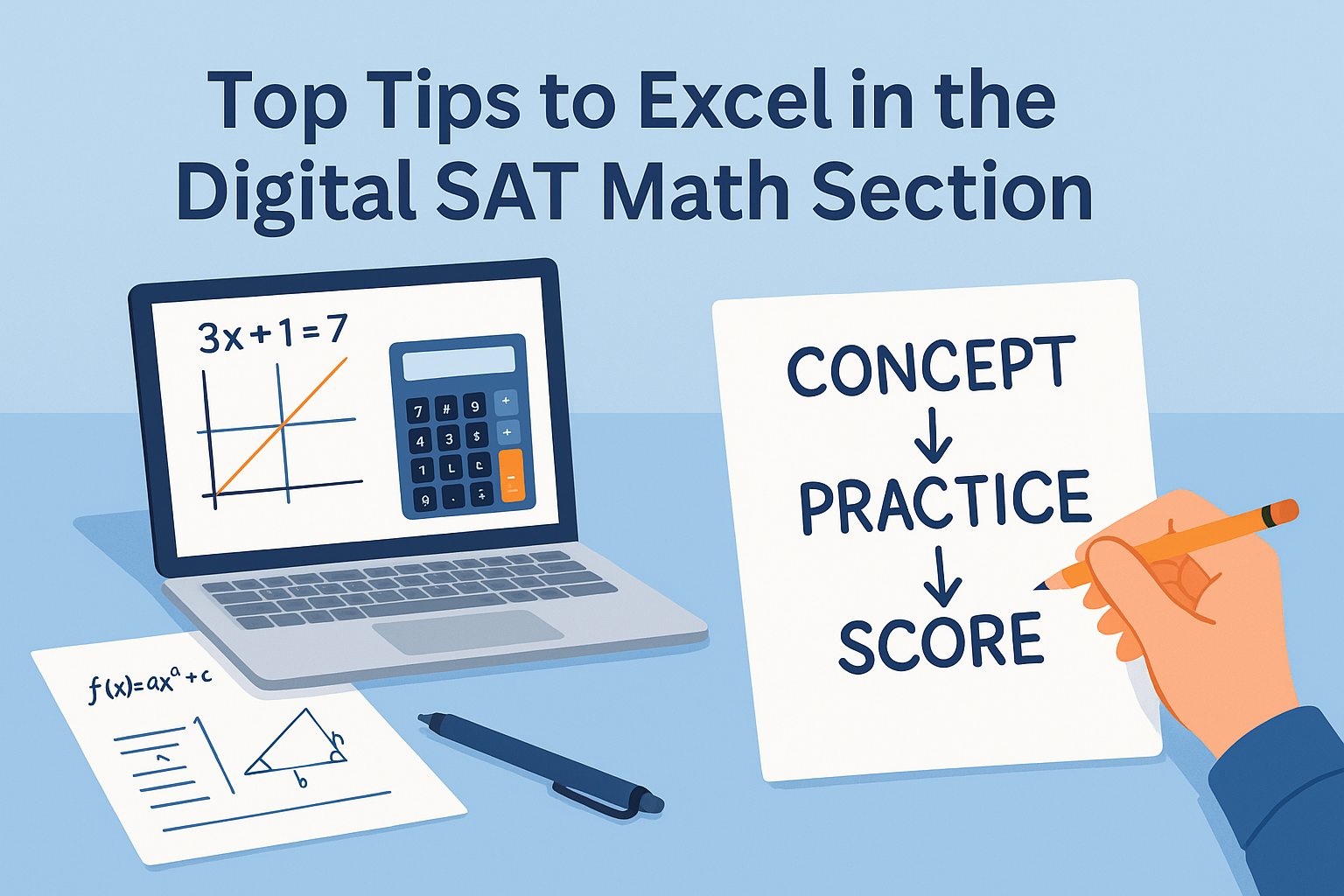
This is where most students trip up. They try to sprint to advanced math like complex trigonometry or polynomials when their algebraic fundamentals are shaky. This is honestly a fatal mistake. Your math skills must rest on a solid foundation of algebraic manipulation, quick solution of linear equations, ratios, and function interpretation. These basics form the backbone of 60-70% of the math tested on the SAT. If the foundation is weak, the whole structure will eventually crumble.
Can you solve a multi-step equation without thinking? Can you manipulate fractions quickly in your head? If you're hesitating even slightly, stop everything and spend some untimed practice on these areas first. Internalizing these core concepts means that when you encounter a multi-step problem-solving question, your brain can focus on strategy instead of getting bogged down in basic arithmetic. Trust us, this foundational work pays massive, massive dividends.
At Catalyst, we’ve seen top scorers build their biggest gains not from more practice, but smarter practice, adapting their study patterns weekly based on diagnostic data.
The Desmos calculator is a gift, but it’s also a sneaky trap if you treat it incorrectly.
Yes, it's available for every single question in the digital SAT math section.
No, you absolutely shouldn't use it for every simple calculation.
Using Desmos to graph a complex parabola or to check if a system of equations has a solution? Using it to calculate $15 + 28$ or figure out what $7/times 8$ equals? That's honestly a waste of precious digital SAT math section: 1 time you'll desperately need for harder problems later. The highest scoring students use the calculator for leverage on complex operations and visualization, not as a crutch for basic computation. Here's the kicker: typing simple numbers into the interface often takes longer than just doing quick mental math.
Estimation is one of the most underutilized strategies for the SAT math section, and it's your secret weapon against the clock. For multiple-choice math questions involving complex decimals or large numbers, deliberately calculating approximate answers can eliminate several incorrect answers much faster than a full, precise computation.
Say you get a question asking for $847/times 293$.
Don't multiply it out completely!
Just estimate: $800/times 300 = 240,000$.
If the options are $20,000$, $100,000$, $250,000$, and $500,000$, your estimation points directly to the correct answer without all that tedious calculation.
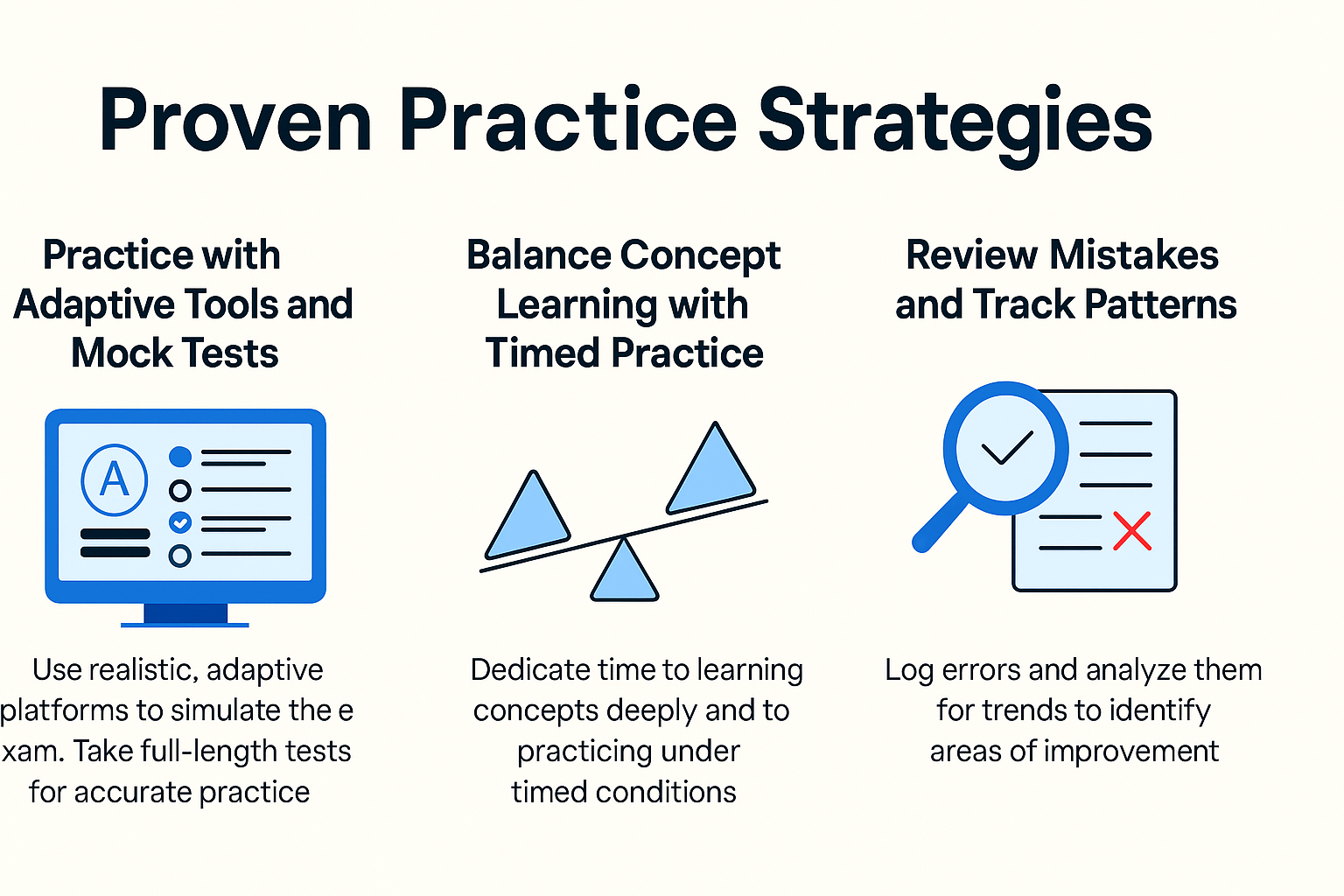
The single biggest mistake we see is students practicing for the wrong test. You need to spend significant practice time with the official College Board Bluebook app. This is the only tool that authentically replicates the adaptive algorithm, interface, and timing you'll face on test day.
Taking at least one full-length practice test using the Bluebook app should be the absolute cornerstone of your prep. Everything matches the actual exam experience. Supplement this with resources like Catalyst's adaptive system, which provides additional practice with AI-driven question sets that adjust to your ability level and give you detailed answer explanations that actually help you learn from mistakes. The key is ensuring your practice tool includes genuine adaptive functionality. Static practice test sets just don't prepare you for how the test actually behaves and responds to your performance.
Effective SAT prep requires two separate modes, and you need both for balance: deep learning and performance under pressure. Too many students only do one, and it never ends well.
The most potent learning happens after the practice test, not during it. Students who see huge score jumps don't just take test after test mindlessly. They meticulously analyze their mistakes and look for patterns in what's tripping them up.
We strongly encourage keeping an error log; a simple notebook or spreadsheet is fine. Note every single error with these details:
This targeted approach allows you to focus your future study on your actual weak points instead of wasting time on concepts you already understand perfectly.
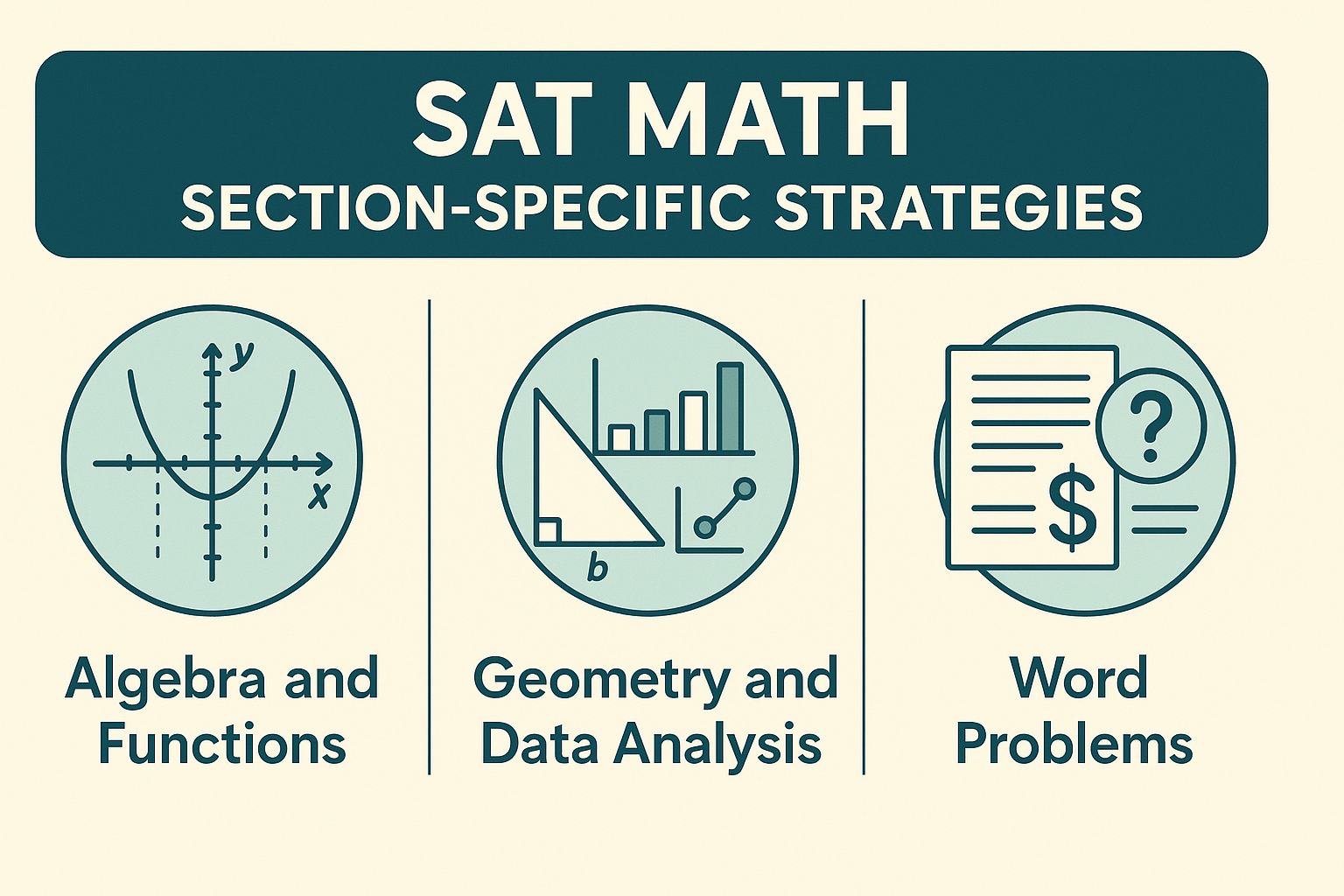
Algebra is the absolute foundation of the SAT math test; it's everywhere you look. You must be fluent in linear equations in all their forms, rearranging formulas on the fly, and solving for variables quickly without getting tangled up.
Quadratic equations are another key area for advanced math questions. Be comfortable with factoring, completing the square, and the quadratic formula, but know when to use which method. Just as important is the graphical understanding. Can you identify the vertex and intercepts of a parabola just by looking at its equation? These concepts show up constantly.
Function interpretation is critical on the modern SAT. You need to fluently translate functions between equations, graphs, tables, and verbal descriptions. Practice evaluating tasks at specific points and determining domains and ranges until it becomes automatic. This combines fundamental algebraic manipulation with deeper conceptual understanding, and that's exactly what separates good scores from great ones.
The geometry portion is surprisingly broad, covering everything from basic area and volume formulas to similar shapes, circle theorems, and coordinate geometry. While the reference sheet is provided, you will save valuable time by memorizing the most common math formulas, the Pythagorean theorem, special right triangles, basic area and volume equations.
Trigonometry has become more prominent on recent tests. You need a solid understanding of sine, cosine, and tangent in the right triangle context and on the unit circle. Don't just memorize the definitions; understand what they represent and how to apply them to solve real problems.
The problem-solving and data portion assesses your data analysis geometry skills through practical applications. You must be able to interpret statistical representations: scatterplots showing correlations, box plots displaying distributions, and measures of central tendency like mean and median. The goal is to extract meaningful insights and apply them correctly; this is a highly valued math skill that colleges actually want to see.
Word problems are challenging because translating everyday life language into mathematical notation requires careful reading and logical thinking.
Here's our proven systematic approach that actually works:
Multi-step word problems are frequent and demand extra attention. These aren't just testing your math; they're testing your logical reasoning and ability to break down complex problems into manageable pieces. Practice these extensively because they appear on every single test.
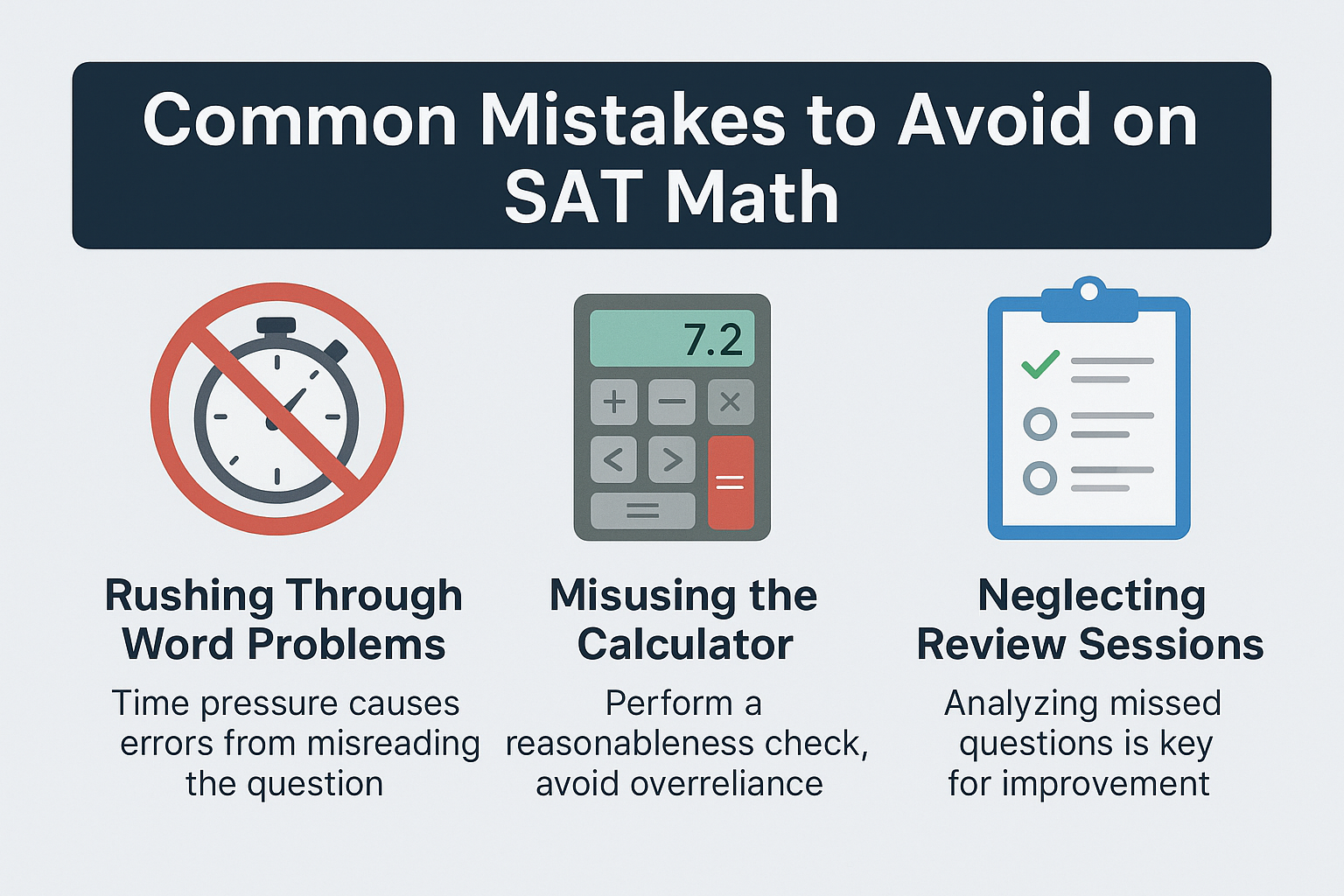
Time pressure causes silly errors from misreading the question. Train yourself to underline what the question asks to avoid solving for the wrong quantity. Never make unwarranted assumptions in geometry problems.
The calculator creates mistakes via data entry errors. Always perform a reasonableness check; a sanity check is non-negotiable. Avoid overreliance; the calculator is for leverage on complex problems, not a substitute for basic math skills.
Treating a practice test only as a score number is the biggest strategic error. Review is key: analyzing every question you missed and guessed on separates students who plateau from those who improve, driving massive score jumps.
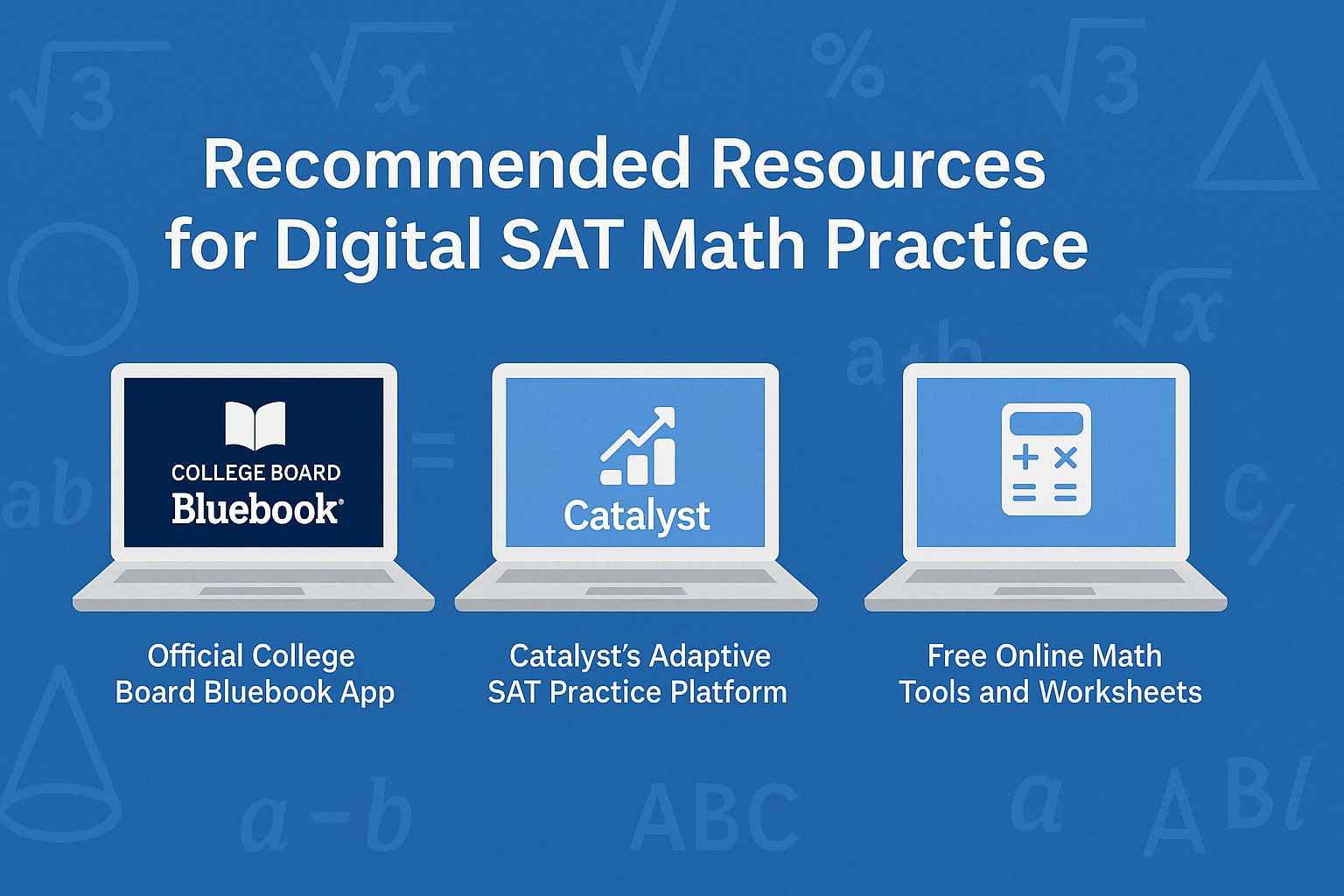
This is your primary resource, hands down. The Bluebook app delivers authentic digital SAT math section modules with the exact algorithm and interface you'll face on test day. There's simply no substitute for practicing with the real thing.
You absolutely must practice with this tool. Take at least two full-length practice tests and treat them exactly like the actual exam. This builds stamina and familiarity with the digital format, and it takes away a lot of the anxiety because you'll know exactly what to expect.
To supplement the official practice test materials, use platforms that offer personalized learning experiences. Catalyst's system adjusts the math questions based on your performance, providing a continuous challenge perfectly tailored to your current ability and progress level. These systems offer detailed answer explanations that actually teach you why the correct answer is right and why the wrong answers are wrong, plus progress tracking across all mathematical concepts. This ensures your practice time is efficient and targeted.
Budget shouldn't be a barrier to great SAT prep. For SAT prep, use Khan Academy for concept learning and extensive problems. Master the Desmos calculator tutorials. Use IXL for skill-based drills targeting weaknesses identified in your error log.
The difficulty level of the underlying math isn't drastically higher than the old paper test. The average structure means well-performing students will face genuinely more difficult advanced math problems in Module 2. This is good news, as it allows you to demonstrate higher knowledge and achieve a higher score than the old format allowed.
Yes, you can bring an approved handheld calculator alongside the on-screen Desmos calculator if you want. The College Board maintains a list of acceptable calculator models on its website.
How should I prepare for adaptive SAT math questions?
The best prep for an adaptive test is building consistently strong performance across all concepts and question types. Practice taking multiple timed, adaptive mock tests to build an understanding of the flow and how difficulty changes based on your answers.


