


Improving your SAT score isn't just about doing more practice tests; it's about learning from each one. With the Digital SAT offering instant feedback and detailed analytics, you can now see exactly where you need to focus your efforts. This guide will show you how to use SAT analytics to study smarter, fix weaknesses faster, and build a clear, personalized improvement plan that helps you prepare effectively for test day.
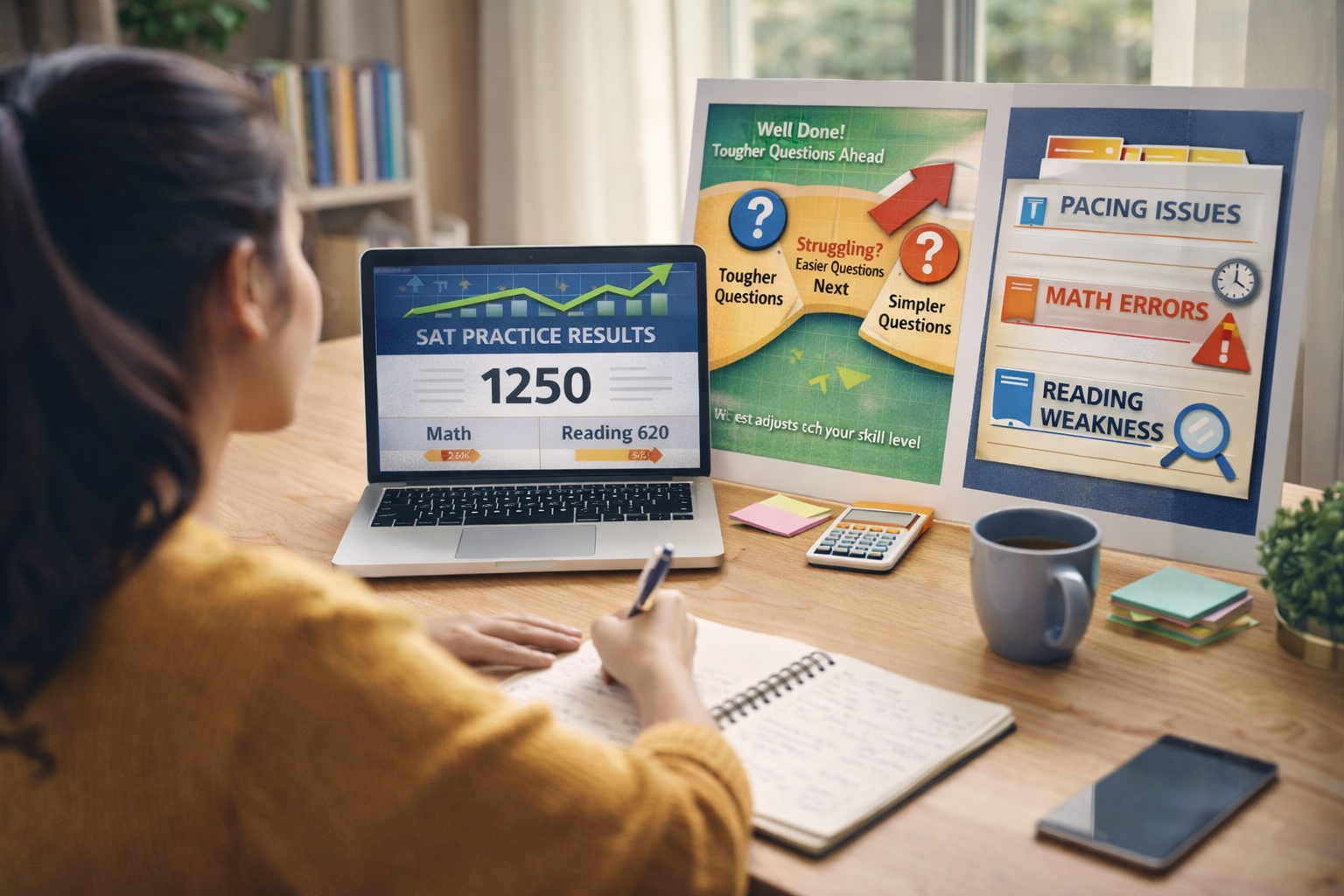
The Digital SAT has changed the game. You get instant feedback after each practice test instead of waiting weeks for results. Analytics make it easier to track progress, spot score trends, and make targeted changes to your study routine. For students and test takers today, analytics are invaluable for effective SAT preparation.
The Digital SAT adapts to your performance, tailoring questions to your skill level. Do well, and the next section gets harder; struggle, and it adjusts accordingly. This shows whether you're ready for challenging content or need to strengthen fundamentals. Reviewing your analytics gives you a clearer picture of your strengths and growth areas.
Analytics reveal why you got that score: pacing issues, question type weaknesses, and mistake patterns. For example, rushing to read questions or making careless math errors? Your analytics highlight these trends. Tracking test scores and practice test scores across multiple practice tests helps you assess student performance and refine your study plan for measurable improvement.

Explore detailed insights on your strengths and weaknesses by section, timing, and error types for focused study.
Your analytics break down performance across Reading & Writing (including Evidence-Based Reading), Math, and subscores like Algebra, Data Analysis, and Rhetoric. Tracking these spots to determine which sections need attention. Low math score? You know where to focus your practice. Note your overall score alongside section scores for a complete picture.
Digital SAT tools record how long you spend on each question, showing if time pressure is holding you back. Pacing data is a game-changer, helping you build stamina and avoid rushing on test day.
Analytics highlight the exact question types or skills where you lose points. This detailed breakdown lets you create targeted practice sessions focused on target areas, so you spend time on what truly matters. Performance analytics also reveal recurring mistakes and skipped questions that need attention.
Understanding whether you missed a question due to a knowledge gap or a careless mistake helps you study smarter. Fixing concepts differs from sharpening attention—analytics help you do both. Tracking whether you answer correctly and why you didn't provides invaluable insights into your problem-solving approach.

Consistently logging your test scores and timing data helps you spot trends and improve steadily.
A simple spreadsheet or tracker lets you log scores, section insights, subscores, and timing. This visual snapshot makes it easy to spot trends and celebrate progress. Google Sheets or Excel are great tools for organizing your data and tracking improvement.
After every test, document your results: module difficulty, score breakdown, time per question, and accuracy by topic. This helps you see how your performance evolves and identify persistent weak spots.
Improvement is gradual. Monitoring your data week-to-week helps you spot patterns, both good and bad, so you can adjust your approach early.

Target high-impact weak areas highlighted by analytics to study smarter and boost your score efficiently.
Bluebook gives official timing, accuracy, and module-level data to evaluate your digital performance. It's a must-have for students taking the Digital SAT, offering detailed breakdowns and progress tracking.
These reports show skill-by-skill improvement, recommended practice sets, and accuracy history. Khan Academy is free and integrates seamlessly with the College Board, making it a helpful resource for targeted practice. The platform offers invaluable insights to help students prepare for the new format and achieve success.
Some platforms offer advanced insights, concept heatmaps, timing charts, and predictive scoring. These tools are perfect for students who want deeper analytics and personalized study plans.
Catalyst uses AI-driven diagnostics and weekly analytics to measure progress and fine-tune study plans. This system helps students create targeted practice plans and track improvement over time.
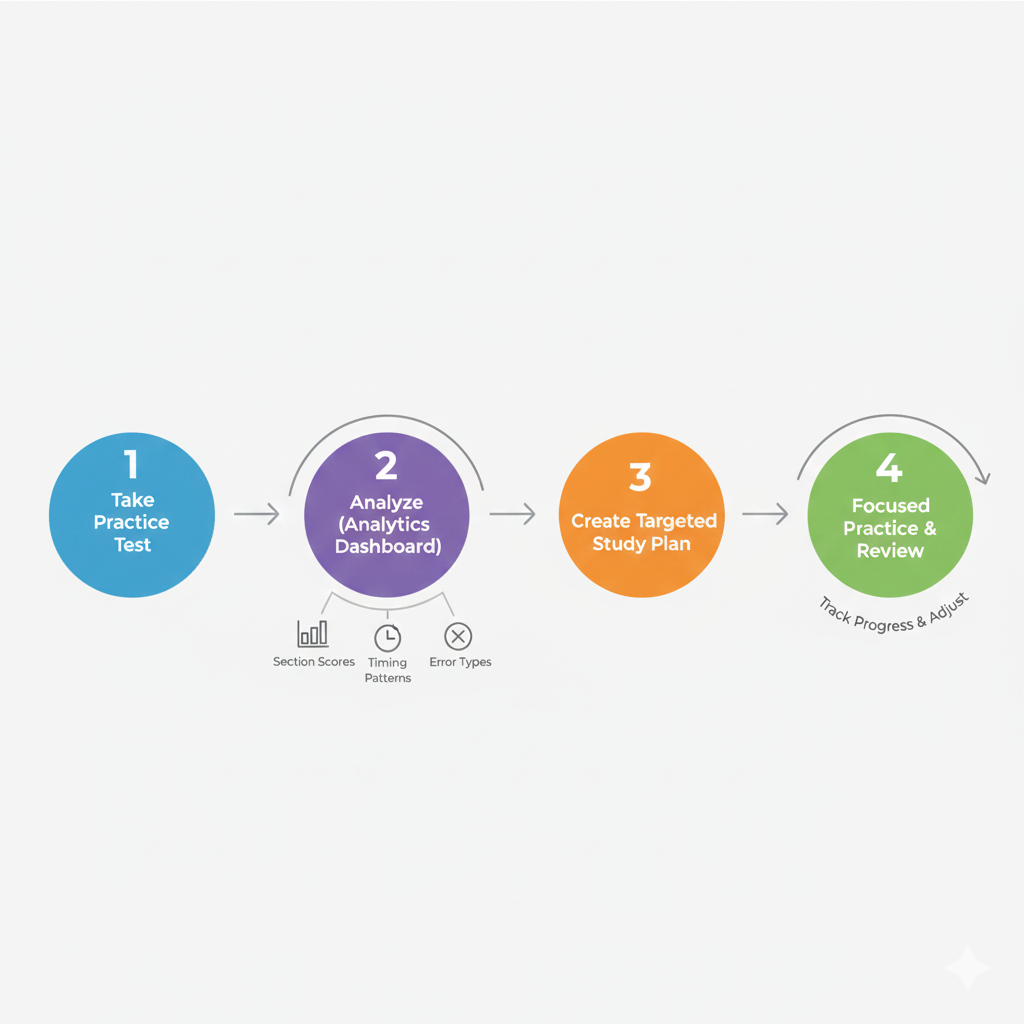
Target high-impact weak areas highlighted by analytics to study smarter and boost your score efficiently. Combined with focused effort on target areas, these strategies offer benefits that can transform your test preparation.
Focus on topics where you lose the most points or where accuracy drops under time pressure. Typically, these include specific sections like the Math section, where students struggle with problem-solving. Targeting these areas ensures your practice is effective and efficient.
Analytics help you match study time to priority areas, rather than spreading effort evenly. By focusing on your weakest skills, you can maximize improvement and reach your target score more quickly.
Use timing data to set benchmarks, for example, average time per Reading question or ideal pacing for Math. This helps you build stamina and avoid time pressure on test day.
Learn why you missed questions: misreading, concept gaps, careless errors, or timing issues. Reviewing your mistakes with analytics feedback ensures you learn from errors and avoid repeating them. Pay attention to which answers were correct and why, helping you develop new approaches to challenging questions.
Follow a regular cycle of practice, analysis, revision, and retesting for continuous score growth.
2–4 full-length practice tests per month are enough for most students when paired with deep review. This keeps your practice fresh and focused.
Short, targeted drills (5–10 minutes) help build mastery in areas like punctuation, algebra, or data analysis. These micro-drills are a great way to tackle specific topics and build confidence. Typically, focusing on one target area at a time yields the best results.
Avoid overlooking timing data and subscores to leverage your analytics for improvement fully.
It's tempting to focus on that one big number. Your score jumped from 1210 to 1260—great! However, if your Reading score dropped while your Math score showed a gain, you're not stronger overall. Section scores and subscores reveal whether you're building balance or just shifting points. Test takers who track score trends alongside their overall score better assess true progress.
Students tell educators, "I knew the material, just ran out of time"—then never dig deeper. Without timing data, you can't see where minutes disappear. Maybe you linger on the first Reading passage, then rush the final questions. Or you over-check early Math problems, leaving hard ones for the final minutes. These patterns don't reveal themselves, you must track them.
Another score-killer: casual error review. People flip through the answer key, think "Oh right," and move on. Next practice? Same question, same result. A mistake log breaks this cycle. Use a notebook or spreadsheet to record: question type, skill tested, your thinking, and the correct approach. Documenting recurring mistakes shows which answers were correct and why.
A good rhythm for most students is to review thoroughly after every full-length practice test and then do a lighter check-in once a week for section work. That routine keeps you close to your data without feeling overwhelmed. During each review, look past the raw numbers and ask what actually caused your misses: rushing, misreading, shaky concepts, or simple guesswork.
Speed comes from being selective, not from working nonstop. Use your analytics to find the topics where you lose the most points and the spots where your accuracy drops once the clock is ticking. Then build short, focused practice around those exact situations instead of reviewing everything you already know.
Analytics by themselves are just information on a screen; they do not raise a score unless you act on them. What they really offer is clarity: they show you where to spend your limited time and energy, and which habits are quietly holding you back.


