
One of the most common SAT questions high schoolers ask is, “When should I start preparing?” The answer depends on your grade level, your goals, and the colleges you’re targeting. Today, AI tools have made SAT prep smarter, more personalized, and efficient. Instead of following a one-size-fits-all SAT prep timeline, students can now use intelligent study apps to plan, track, and optimize every step of their SAT prep journey.
In this comprehensive guide, we will explore how artificial intelligence supports every phase of preparation, from setting a SAT study plan to analyzing practice test performance, ensuring you make the most of your prep time whether you’re in junior year or senior year.

Starting early gives students ample time to master challenging concepts and develop confidence through multiple practice tests. AI-driven learning tools can assess your diagnostic performance and adjust your study schedule automatically.
For instance, when students begin studying for the SAT at least 6–9 months before the test date, AI platforms like Khan Academy’s SAT or College Board–aligned apps provide personalized question sets, highlight weak areas, and help ensure steady progress. Research consistently shows that those who start early and use adaptive tech-driven feedback achieve a higher SAT score.
Most college application deadlines fall between October and January of your senior year. Knowing this timeline allows students to backward-plan their SAT schedule, test dates, and revision windows.
AI tools simplify this process by syncing test prep reminders with your academic calendar. They help you decide the best SAT prep plan by analyzing your study time, tracking upcoming test dates, and recommending the ideal final practice test window before submission deadlines. This way, students avoid last-minute pressure and can prepare strategically.
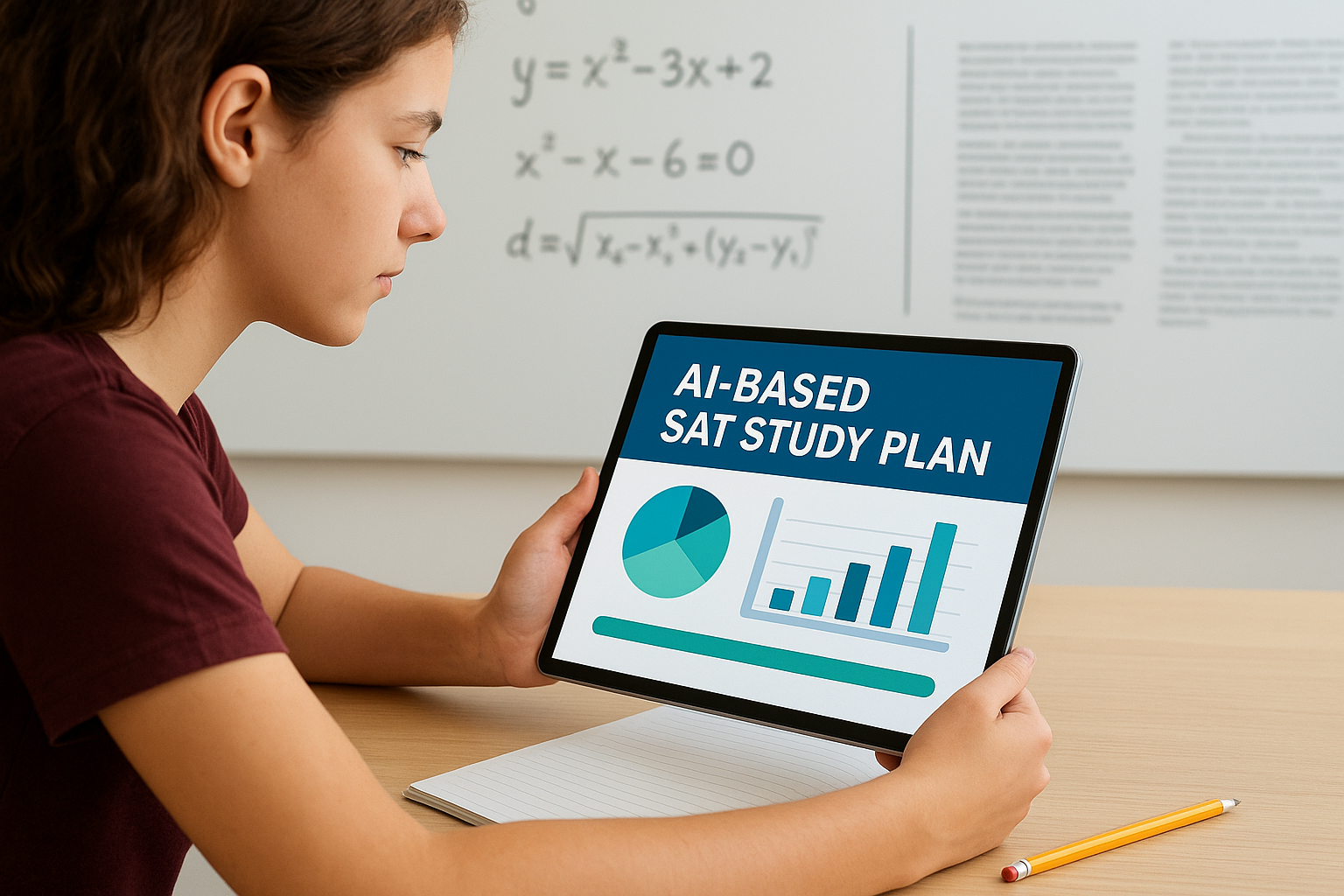
For juniors, the optimal time to begin prepping is during the Fall or Winter of 11th grade. At this stage, AI-powered platforms can create a customized SAT study schedule based on your diagnostic performance, available study materials, and your target colleges.
Tools like Khan Academy, PrepScholar, and Magoosh use machine learning to map your progress and set realistic milestones. Starting early ensures you’ll have ample time for practice questions, data analysis, and improving your test-taking skills without feeling overwhelmed by schoolwork.
A structured 6–9 month SAT study plan helps you move from fundamentals to full-length mock tests. Here’s how you can design it effectively using AI tools:
This dynamic approach ensures balanced learning and helps you retain key skills over several weeks without burnout.
During junior year, most students manage a heavy course load with AP classes and extracurriculars. AI-based planners can make your prep plan easier by scheduling study sessions around your school year commitments.
Use calendar integrations or productivity apps like Notion AI to create short, focused sessions of 60–90 minutes daily. These sessions can include reviewing answer explanations, revisiting advanced math concepts, or taking short reading and writing quizzes. With consistent tracking, AI ensures you’re making progress without compromising your school performance.
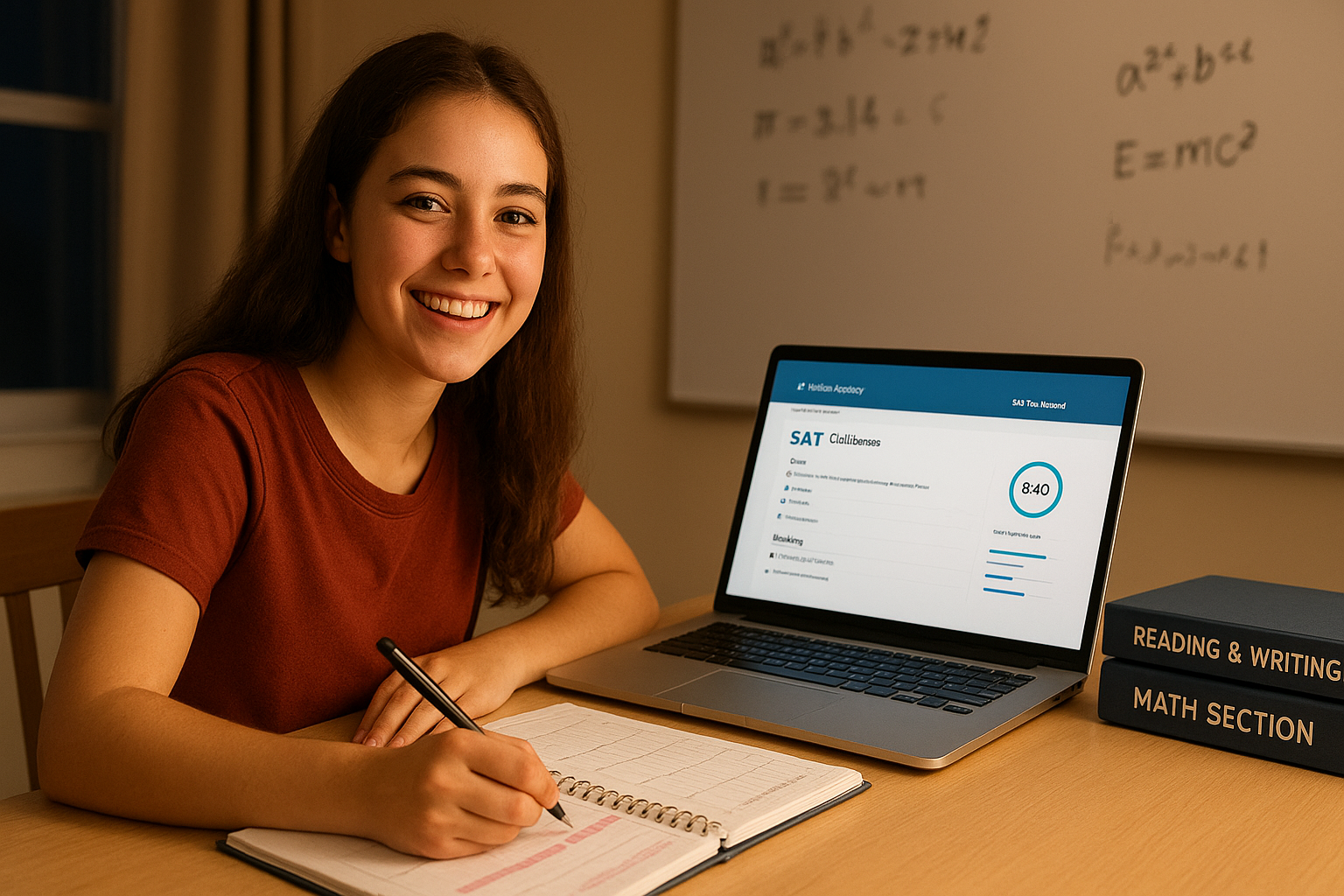
For seniors who took the SAT as juniors, AI tools can analyze your previous test report and identify which SAT sections lowered your score. This allows you to plan a targeted retake strategy.
Seniors typically choose the August, October, or November test date to retake the exam before college deadlines. With AI-based feedback, you can improve your weak areas, practice writing questions, and maximize your final practice test performance efficiently.
Most colleges accept October or November scores for early action and regular admissions. AI-enabled prep platforms help you align your test date and SAT schedule with each institution’s deadline.
They can even simulate potential outcomes by comparing your current SAT score with your goal scores and suggesting the best test date to achieve your target score. This data-driven insight helps ensure your SAT preparation is aligned with real-world timelines.
In senior year, students often struggle to juggle application essays, recommendation letters, and SAT prep. AI tools make multitasking easier by sending reminders, tracking your study time, and suggesting shorter revision modules.
They also help you manage study sessions with focused revision in the reading and writing, math section, and evidence-based reading areas. By focusing on your weak areas using adaptive question sets, you will gain a better understanding of test patterns before test day.
This is when your SAT prep journey begins. Use AI learning platforms to understand the SAT format, question patterns, and time distribution across SAT sections. Key focus areas:
AI feedback tools show which types of writing questions or math concepts consume the most study time, helping you refine your best strategy for the months ahead.
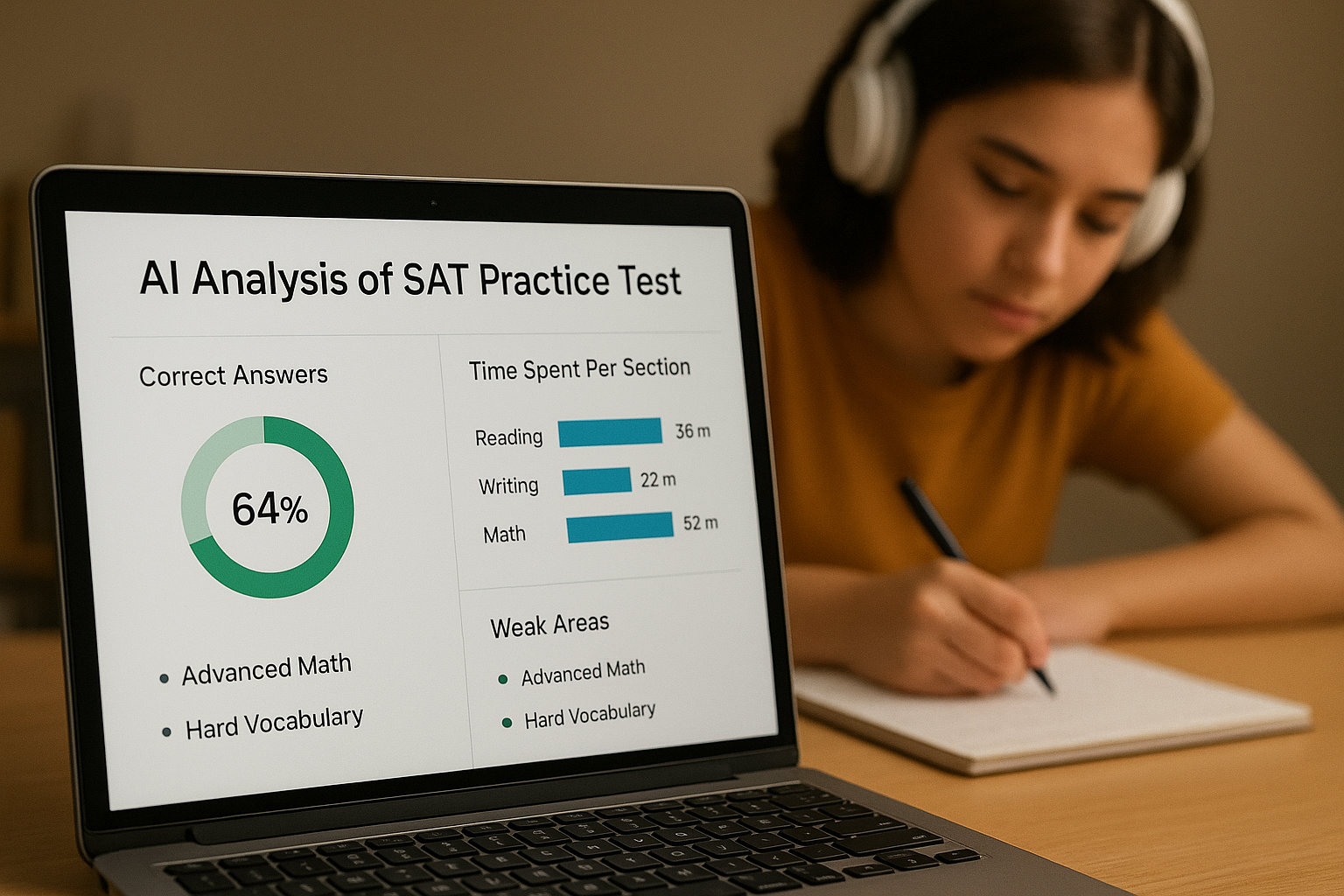
At this stage, you should take a practice test every week to track progress. AI tools can automatically grade your responses, highlight correct answers, and generate detailed answer explanations. Focus on:
AI dashboards visually display your growth trend and pinpoint weak areas to fix before your final practice test. This phase is about translating knowledge into exam-ready performance.
Now it’s time to fine-tune your prep plan. Instead of learning new topics, focus on consolidating what you already know.
AI assistants like ChatGPT and GrammarlyGO can help you summarize study materials, explain writing section rules, and suggest mini-quizzes.
The goal is to walk into test day confident, organized, and ready for your best performance.
Choosing the right test date is crucial. AI tools can automatically sync college board deadlines with your study plan and alert you if you’re cutting it close.
You should pick a test date that gives at least two months’ buffer before application deadlines. That leaves time for score reports and, if necessary, a retake. The right SAT schedule ensures you meet all your submission goals without unnecessary pressure.
Avoid booking your SAT near AP exams or major school activities. AI scheduling tools like Google Bard or Notion AI can analyze your academic calendar and suggest balanced windows for uninterrupted prep time.
Remember, consistent study sessions over several weeks are far more effective than cramming. This is where AI helps you stay organized, motivated, and consistent.

Progress tracking is one of AI’s strongest advantages. Smart tools visualize your SAT study progress, show accuracy rates, and even forecast your potential SAT score.
If your performance plateaus, AI may recommend creating a modified study schedule, different practice sets, or alternative prep strategies. This real-time adaptability ensures you’re always moving closer to your target score.
Over-preparing can cause students to lose focus. AI can prevent this by inserting scheduled breaks, lighter study days, and interactive gamified lessons. Apps like Quizlet or StudyBot use micro-learning techniques to keep study sessions short but productive.
The best part? They remind you to rest and refocus, ensuring your prep remains steady, enjoyable, and sustainable throughout the SAT prep journey.
Most juniors begin SAT prep between September and December of junior year. Starting early allows enough prep time to take a diagnostic test, build a personalized study plan, and improve test-taking skills using AI tools before attempting the first practice test in the spring.
Yes! With consistent SAT preparation, seniors can raise their SAT score significantly in 8–12 weeks. AI platforms tailor study schedules, simulate test conditions, and track accuracy to ensure each practice test session leads to measurable improvement before the test date.
Most students take the SAT two to three times, first in junior year and again in senior year if they aim for higher goal scores. AI performance reports help determine whether another attempt is beneficial and suggest which weak areas to prioritize before the next test day.


