

When high school students start thinking seriously about the college admissions process, the first real hurdle is picking which standardized test actually fits them, the SAT or ACT. Reading comparison matters way more than most people realize, sometimes more than the math section or anything else on the test. Reading comprehension is just different. It affects how you do on everything else. It's about how you naturally read, how stress hits you, and how you work through question styles.
Questions about SAT vs ACT reading difficulty can feel like a lot. But they genuinely affect your composite score and how your application looks overall. The reading and writing skills play a huge role in these test sections. They often determine how confident you feel through the entire test experience.
Universities in the U.S. and a bunch of other countries treat both the SAT and ACT as equally accepted. They're both valid ways to prove you're ready for college work. Admissions officers focus on how your scores reflect your prep, not which test company's name is on there. What actually matters is choosing the exam that lets you read accurately and work confidently when you're racing the clock.
Students who like slow, careful reading and breaking down how an author builds an argument? They usually feel more at home with the SAT. Students who read fast, grab main ideas quickly, and feel fine making educated guesses under pressure? They tend to go for the ACT. Match one test to your natural style and you'll stress less and probably score higher.
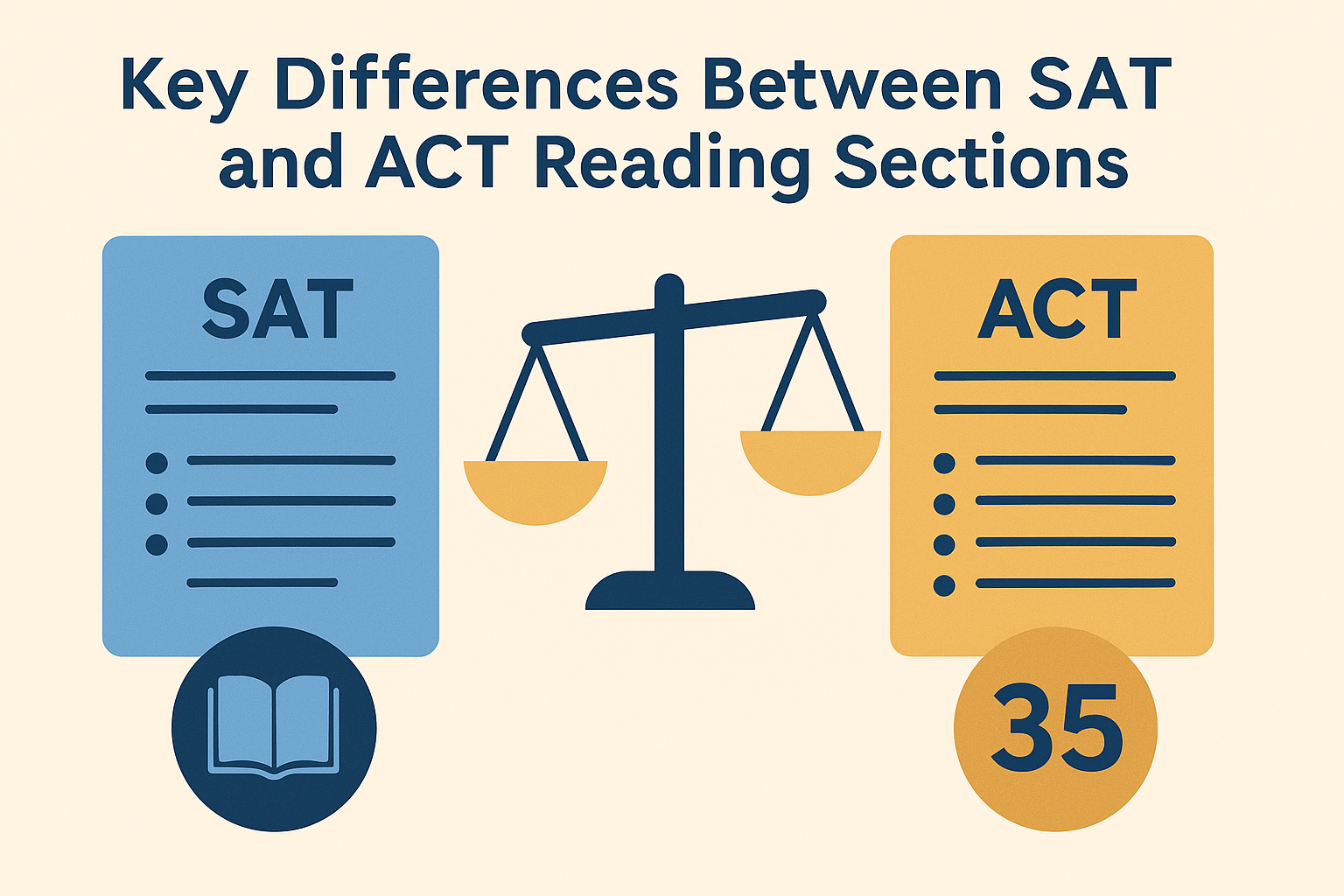
Both the ACT and SAT are trying to see how well you process and understand written stuff, but how they actually do it is really different. Knowing these key differences matters a lot for test prep.
The SAT has 52 questions across 65 minutes. You get literary passages, historical docs, science pieces, all mixed in with evidence-based items. The ACT throws 40 questions at you in just 35 minutes, broken into four separate passage chunks. The actual number of test questions isn't the point; it's how much time you have to think through each one.
Reading passages on the SAT are usually denser. More complicated language, trickier ideas that need real attention. ACT passages are more straightforward, but they come fast, one after another, each with a bunch of questions attached. The challenge with ACT is staying focused when you're moving from one entire passage to the next without much breathing room.
On the digital SAT, you get roughly 75 seconds per question. That's enough to go deeper and check yourself. On the ACT, you've got just over 50 seconds per question. Hesitate and you're toast. This testing time difference is probably the main reason students say one test feels "harder" than the other test.
The reading and writing section on the SAT isn't just a speed-reading contest. It's really testing your critical thinking skills applied to text. The College Board designed the digital SAT to reward kids who make rhetorical moves and can prove their answers with evidence.
The reading and writing section on the digital SAT usually has one literature passage, one or two history or social science passages, and one or two science-focused texts. Sometimes there are paired reading passages asking you to compare perspectives or arguments. This mix is basically what you'd see in a solid high school class.
Here's what makes the SAT format different: pairs of questions where one asks for an answer and the next asks for the exact lines that back it up. These are great if you read actively, mark stuff up, and can defend your picks with clear proof from the text. They're brutal if you're just guessing fast without thinking it through.
A lot of wrong answers on the reading and writing section sound totally fine at first glance. But look closer, and they twist the tone, mess with the scope, or change particular details from the passage just slightly. Some wrong answers use stuff you might know from outside instead of what's actually in the text. Best approach? Treat the passage like it's the only source of truth. Check every single phrase in an answer against what's actually written.
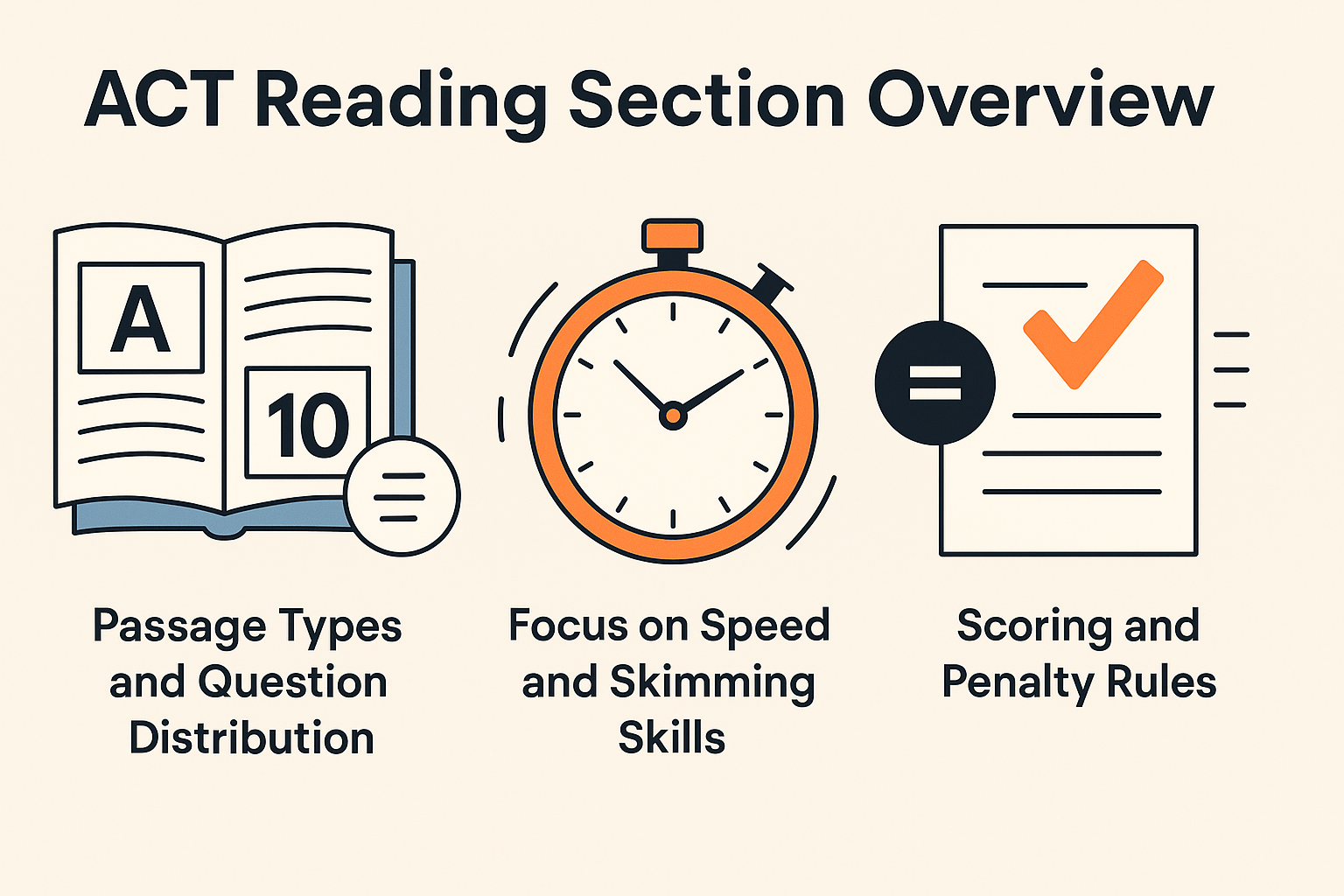
The ACT approaches reading assessment with a greater emphasis on efficiency and coverage. The design of the ACT reading section demands that students process information quickly and move on, prioritizing a fast extraction of facts and ideas.
The ACT reading section gives you four passages or passage pairs: prose fiction, social science, humanities, and natural science. Each one typically has ten test questions, everything from basic comprehension to inference to function. The structure never changes, so you can build the same routine for every passage.
Because testing time is so tight, ACT reading is all about rewarding students who skim well and locate key lines without constantly rereading. You can answer tons of test questions just by finding topic sentences, catching transition phrases, and tracking repeated ideas. If you read every single word slowly, you need to practice faster skimming.
Both the SAT and ACT score based on correct answers only, with no penalty for getting stuff wrong. On the ACT, every right answer in reading feeds straight into your composite score. Leave blanks and you're pretty much guaranteed to hurt your final score. Guessing strategically isn't a nice-to-have; it's just how the test works.
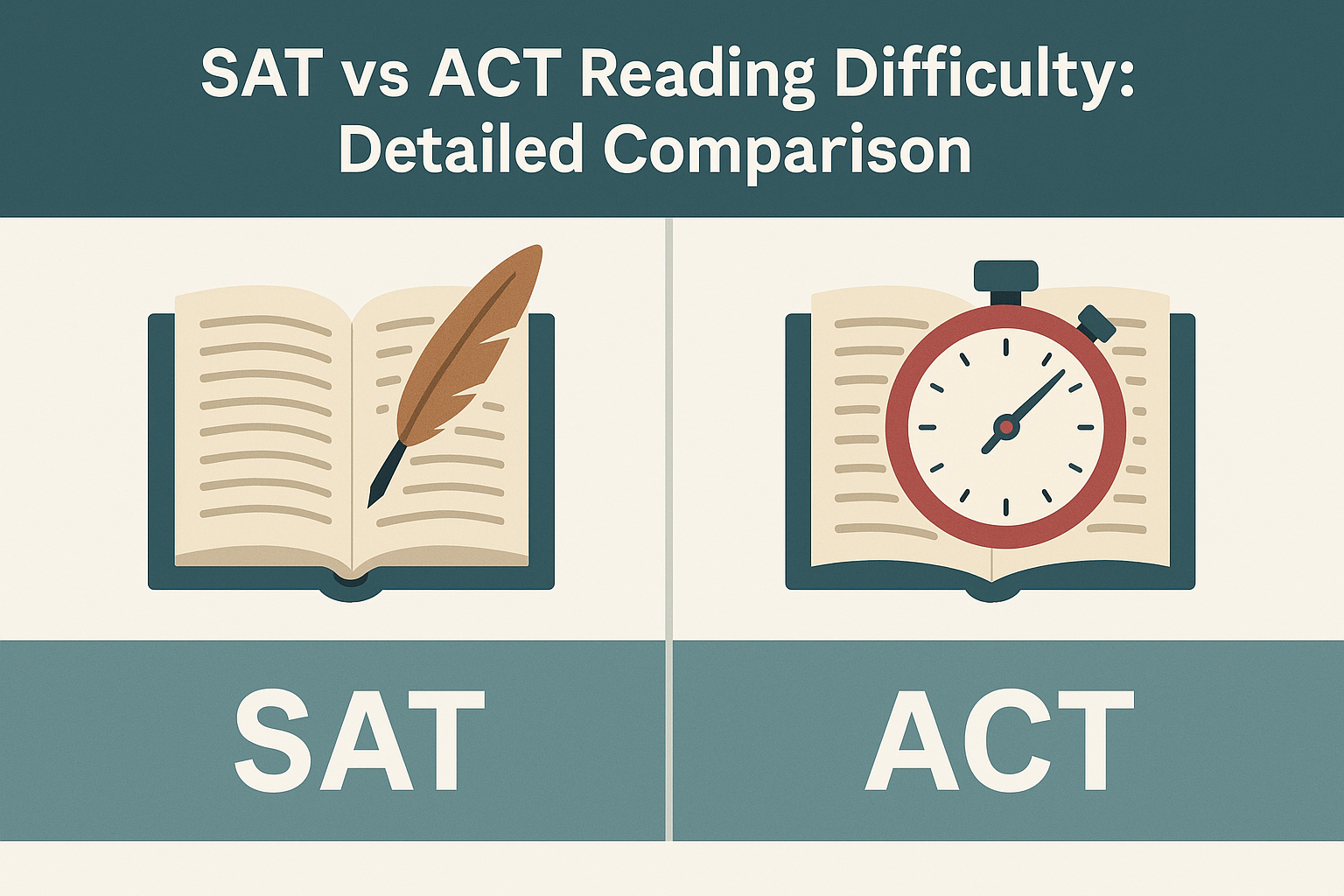
The true difficulty in the ACT or SAT choice rests on which specific intellectual muscle the student is strongest in: deep analysis or swift execution.
The reading and writing section on the digital SAT tends to use fancier vocabulary and longer sentences that you need to decode. ACT passages stick to more modern, simpler language but still make you interpret tone, purpose, and subtle hints. How comfortable you are with older or formal writing should absolutely affect which exam feels easier.
For most students, timing is everything. Struggle to finish practice test sets on time? The SAT will probably feel more forgiving with its slower pace. Read fast, naturally, but lose patience with dense text? You might find the ACT feels easier even though the clock's tighter.
Test questions on the digital SAT push you a bit more toward multi-step reasoning, weighing evidence, and comparing viewpoints across reading passages. ACT questions are usually more straightforward, but you have to grab accurate information super fast. It's really about whether you think better with more time or think faster under pressure.

Choosing between the ACT and SAT is not a coin flip; it’s a calculated decision based on a self-assessment of your intellectual profile.
Look, if you've spent time building up your vocabulary, if you actually enjoy analyzing literature, and if you like having time to really think questions through, the SAT is probably your move. The digital SAT loves students who can spot tiny differences in what words mean and who are good at pulling textual evidence to back up answers. Do you usually do well in English classes where close reading matters? Then the SAT format probably fits you. Also, if time pressure freaks you out and you'd rather work at your own pace, the SATs got way more generous timing. That's a big deal. The SAT reading and writing section lets you show how deeply you understand stuff instead of just how fast you can move.
Read fast? Remember details without trying too hard? Make decisions quickly and don't overthink. Check out the ACT. The ACT reading section is built for students who can soak up information the first time through and don't second-guess every answer. If you usually finish reading assignments way before everyone else in class and you actually remember what you read without reviewing, the act's pacing will probably feel pretty natural. The act also works well if you like knowing exactly what's coming. Four passages every time, same length, same setup. That predictability helps with nerves. Oh, and if you're into science stuff, the ACT has an optional science section. It's not the same as those old SAT subject tests, but it does show your scientific reasoning skills.
Best way to figure out which test works for you? Just take a full practice test for each one. Seriously. Grab a digital sat practice test from the College Board website and do it with actual timing. Use the answer key to score it, then look at what types of questions messed you up. Then get an official ACT practice test and do the same thing. Pay attention to whether you finish comfortably or you're scrambling at the end. Compare your scores; there are tables that show you what's equivalent. Lots of students score about the same on both tests. If that's you, then other stuff matters more, like when's the next test date, or do you just vibe better with the SAT format versus how the ACT's structured? But if your scores are way different, well, that's your answer right there. Focus your test prep energy on whichever one you scored higher on.

Regardless of which ACT or SAT path you choose, improving your reading and writing skills is a universal strategy for boosting your overall test performance.
Active reading works on both exams. Quickly summarize each paragraph in your head, mark when the viewpoint shifts, and figure out what the author's trying to do. After every practice test set, go through your mistakes by question type. You'll start seeing patterns, maybe you keep misreading tone or missing small qualifier words.
For the digital SAT, work on getting comfortable with dense passages, drill those evidence-pair questions, and build vocabulary by using context clues. For the ACT, do hardcore timing drills, practice letting go of questions that stump you, and get better at skimming without losing accuracy.
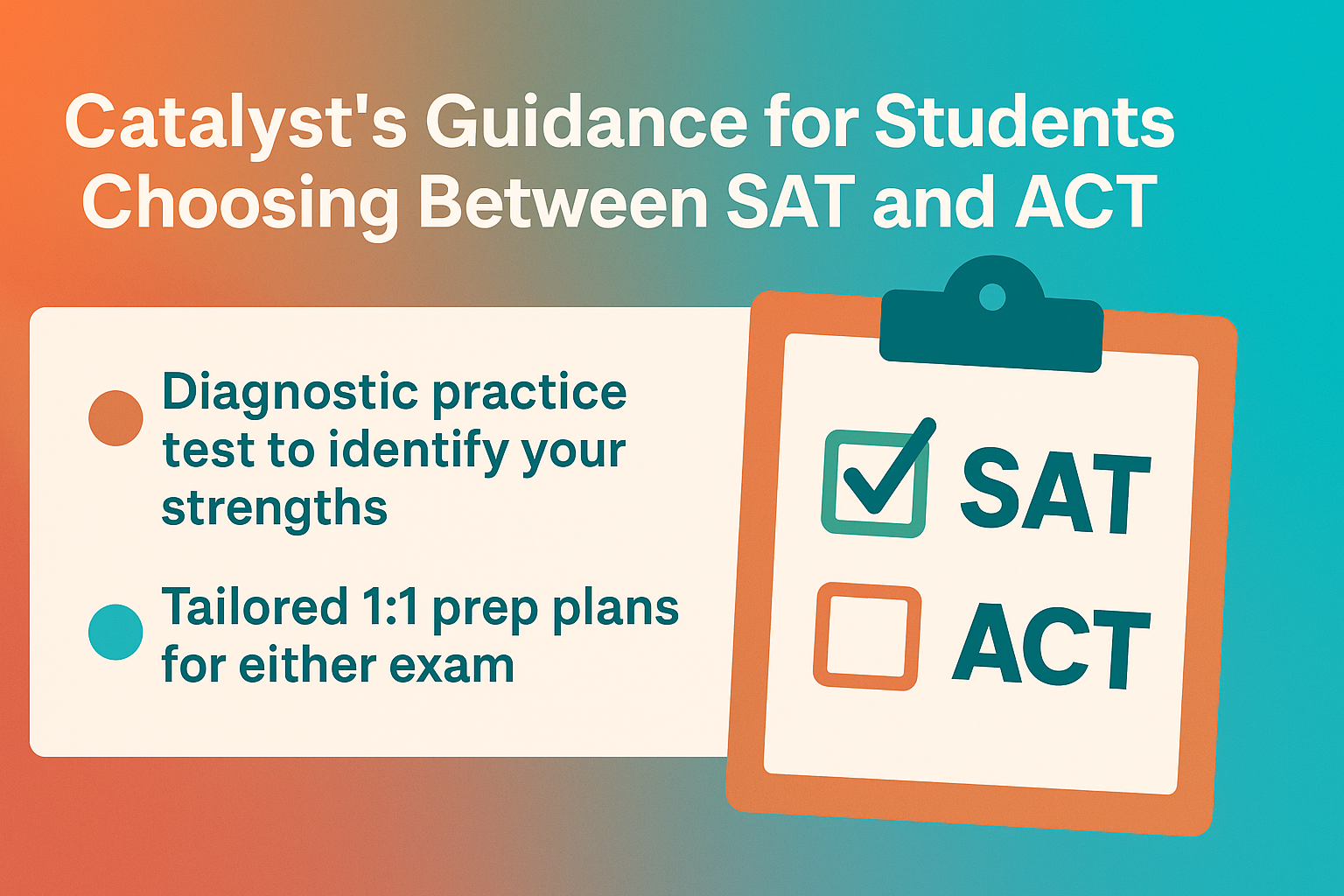
Navigating the complexity of the college admissions landscape requires more than just academic ability; it demands strategic planning. At Catalyst, we provide clarity in the choice between the ACT and SAT to help students reach their maximum potential.
We've got this diagnostic practice test that's specifically built to show you which exam you're naturally better at, like actually better at, not just which one you think you prefer. We look at everything: how you did on math questions compared to the reading and writing section, how you handled the optional science parts, and that gives us real data on whether your essential skills match up better with the digital SAT or the ACT. We go through the answer key with you, but not just to show what you got wrong. We figure out why you got it wrong. Is your struggle with math questions actually because you don't know the content, or are you just running out of time? Some students are legit surprised when they find out they're way better at one test than they thought. This diagnostic thing is honestly the best tool for deciding which test to prep for and when you should schedule your test date.
Once we know from the diagnostic whether you should focus on the ACT or the SAT, we build you a totally personalized 1:1 plan. We hit your specific weak spots across all the test sections, whether that's keeping up with the crazy pacing of the science section of the ACT, doing the deep analytical stuff the SAT needs, or just nailing the math tests on either exam. We walk you through what both the ACT and SAT actually demand, make sure you know the content cold and can handle the pace, all timed for your test date. Getting a prep plan that actually gets the key differences between the two exams is how you land a top score in this whole competitive college admissions mess. And if you decide to take the optional writing section, we prep you for the SAT essay or ACT writing, too.
ACT reading feels harder to a lot of people because you're answering way more questions per minute and barely have time to go back to the passage. The reading and writing section on the digital SAT gives you more time to work slowly and carefully, but it expects precise interpretation and a tight connection to the textual evidence. Which is "harder" really depends on whether speed or subtle details trip you up more.
Yeah, you can; both exams need solid reading comprehension, understanding vocabulary in context, and comfort with nonfiction passages. Lots of students build general reading skills through test prep first, then focus on one test once they see which format gives better practice test scores under time pressure. Just don't wait too long to pick one, or you'll spread yourself too thin in the admissions process.
International students usually do best starting with whichever exam is easier to access where they live and whichever passages feel more comfortable in terms of language. Take a timed practice test for each and see whether the longer, tougher digital SAT texts or the faster-paced ACT sets match your reading style and how you manage time better.


