

The digital SAT has changed how students approach preparation, pacing, and strategy. With adaptive modules, shorter test sections, and on-screen tools replacing paper booklets, strong digital SAT time management skills matter more than ever. Many test takers quickly learn that content knowledge alone isn’t enough, using time wisely and staying steady under pressure plays a major role in performance. This guide explains practical time management strategies you can use during prep and on test day, helping you approach the exam with confidence and clarity.
The adaptive format shapes both difficulty and pacing. Students first complete the first module, and performance there influences the second module, which may present harder or easier items. This means your timing decisions early on directly affect the difficulty path ahead. Moving too fast through easy items can create avoidable wrong answers, while overthinking can make you run behind. Balanced pacing protects your accuracy and reduces careless mistakes.
Accuracy determines your final correct answer count, but speed influences how many items you actually reach. Good timing does not mean rushing; it means avoiding time traps, recognizing when to move ahead, and trusting your first instinct on questions you understand well. Students who learn to maintain a rhythm across modules avoid panic, preserve focus, and maximize every point.

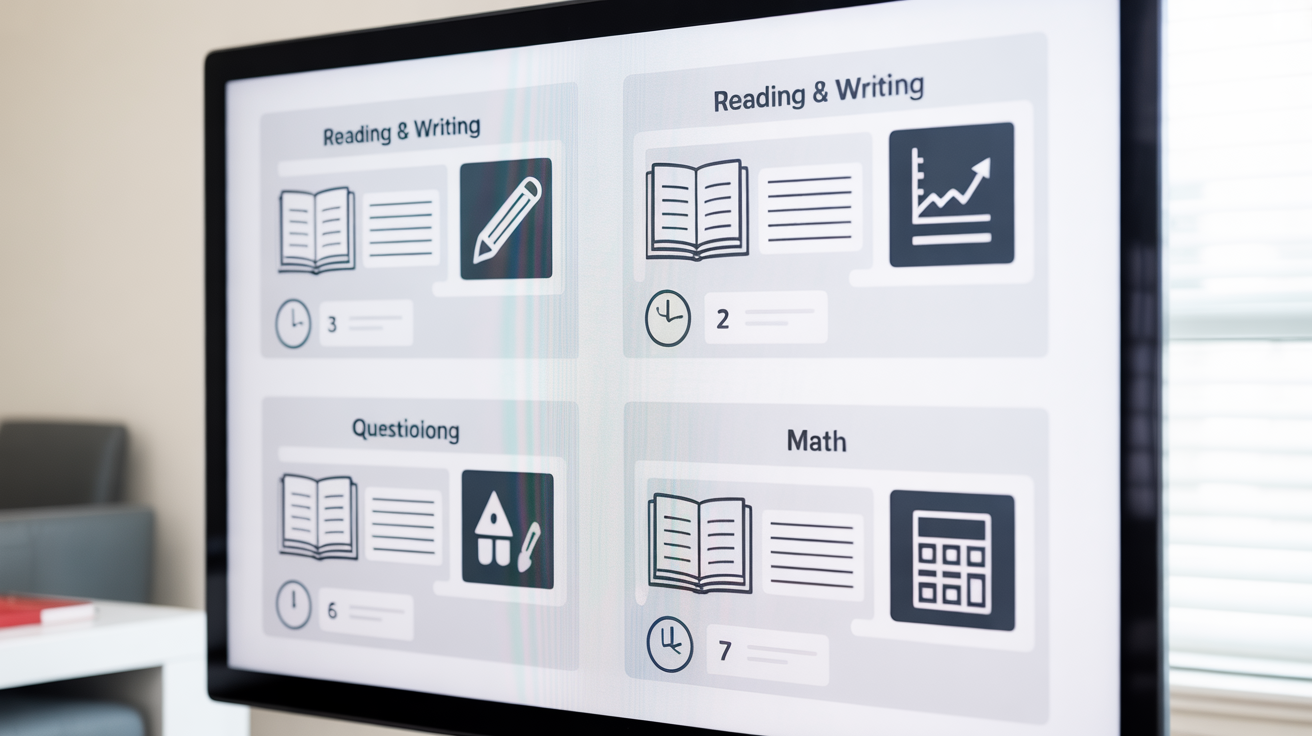
The reading and writing section provides 64 minutes total, split into two adaptive parts. Each module lasts about 32 minutes and includes 27 questions. The section contains a broad range of short passages rather than long readings, so you must adjust your approach. Many find this format more manageable, but only if they practice pacing across the reading and writing tasks.
The math section features two adaptive modules as well. 22 questions in 35 minutes each. You may use the built-in graphing calculator, though switching between tools can use valuable time. Some items involve advanced math concepts, while others rely on steady math skills and efficient problem solving. Learning when to calculate and when to estimate helps you stay on track.
Because the second module may lean toward easy, medium and hard items depending on earlier performance, you must be flexible with pacing. Harder modules can feel more time consuming, and good timing in the first helps you create leftover time later. Focus on avoiding slowdowns early so you have space to think through later challenges.
Some sat reading or math questions feel tricky from the first glance. When a problem slows you down, mark it and move forward. Students often lose minutes trying to solve a single item that could be finished later. Since modules contain a broad mix of easy and challenging items, your goal is to collect points efficiently, not to conquer everything at once.
If you finish a module early, use that buffer to recheck flagged items. Many careless mistakes come not from difficulty but from minor misreads. Reviewing improves accuracy without adding stress. This is especially helpful in the writing section, where detail matters and small edits can fix otherwise wrong answers.
Some test takers assume the first module is easier and rush through, only to lose accuracy. Treat every module with balanced pacing. Your performance in the first module influences the second module, so consistency is your strongest strategy.
The reading section no longer uses long texts; instead, students encounter reading passages tied to single questions. To save time, skim for structure rather than detail. Look for:
This approach helps you avoid spending too long on any one passage and supports stronger reading comprehension.
The on-screen tool is helpful but switching repeatedly can cost seconds. Use it for:
For simpler items, use mental math or jot notes on scratch paper to maintain flow. Students who handle arithmetic quickly gain more remaining time for harder items.

Try to finish each module with 2–3 minutes to spare. These small buffers let you revisit flagged items, refine answers, or check bubble selections. Even medium-difficulty items benefit from a quick review, and your accuracy increases without extra pressure.
This pacing system helps you secure as many points as possible:
This avoids stalls, reduces stress, and leverages smart pacing rather than speed alone.
Use practice tests, especially timed practice tests, to measure your rhythm. For example:
Benchmarks help you manage your time and prevent last-minute panic.
The Bluebook platform includes:
Become comfortable with these during prep. On test day, you will save seconds and remain focused because the tools already feel familiar.
Using the College Board’s testing environment is essential. Taking the SAT through the Bluebook app lets you:
You will also grow comfortable with the look and feel of the real testing room environment.
After every practice, review your timing patterns:
This analysis helps refine your timing choices and makes practice more meaningful.
Short timed drills build your natural sense of pace. Try:
This exposure strengthens your instincts and reduces anxiety during the real exam.

On test day, start steady. When the test center doors open, settle your materials and remind yourself of your pacing plan. Nervousness is normal, but routine breathing and a clear strategy help you maintain balance. When you step into the test center, focus on the present moment instead of potential outcomes.
If the module is ending and you’re running short on time:
The digital SAT rewards smart decision-making as much as content mastery.
On average, students get about 70–75 seconds for each item in the reading and writing section, and around 90–95 seconds for each problem in the math section. These numbers vary because each test section includes a broad mix of easy, medium and hard items. Mastering time management skills helps distribute effort evenly during the exam.
Yes, the digital SAT feels more compact because the exam lasts about hours and 14 minutes with two modules in each section. While you answer fewer total items, the presence of adaptive modules makes time management especially important. Students should practice with timed practice tests to get comfortable with the pacing and on-screen layout.
Start by using full-length practice tests, then review both errors and timing logs. Track where you lose minutes, long readings, slow math questions, or overthinking in the writing section. Use a mix of drills, pacing checkpoints, and module-specific strategies to build speed. With consistent training, students learn to manage your time naturally.


