

Despite years of evolving research, changing formats, and transparent data from the College Board, many parents still approach SAT preparation through assumptions formed years ago. These SAT prep myths often come from personal experiences with the paper SAT, conversations with other parents, or outdated advice passed along during school meetings. Unfortunately, believing these myths can delay preparation, increase pressure, and limit a student’s potential during the college admissions process.
The digital SAT is not the same exam parents took decades ago. It measures different specific skills, adapts to performance, and rewards strategic preparation rather than raw intelligence. In this blog, we unpack the most common misconceptions parents still believe, explain why they’re misleading, and replace them with evidence-based insights that actually help students improve SAT scores and confidence.

Many misunderstandings stem from how standardized tests worked 10–15 years ago. Back then, the entire test felt more memorization-heavy, and preparation often meant drilling vocabulary lists or completing endless worksheets. Today’s SAT test is skill-focused, adaptive, and designed to assess reasoning rather than rote recall.
Parents who remember the paper SAT may assume that high grades alone guarantee strong performance. However, the modern SAT evaluates critical reading, problem solving skills, and effective time management; skills that aren’t always fully tested in the high school curriculum.
Another reason these common myths persist is aggressive marketing. Promises of “guaranteed score jumps” or “secret shortcuts” often oversimplify how score improvement actually works. Word-of-mouth stories such as one student taking a few practice tests and suddenly scoring higher, ignore the reality that several factors influence results, including preparation style, consistency, and familiarity with the chosen test.
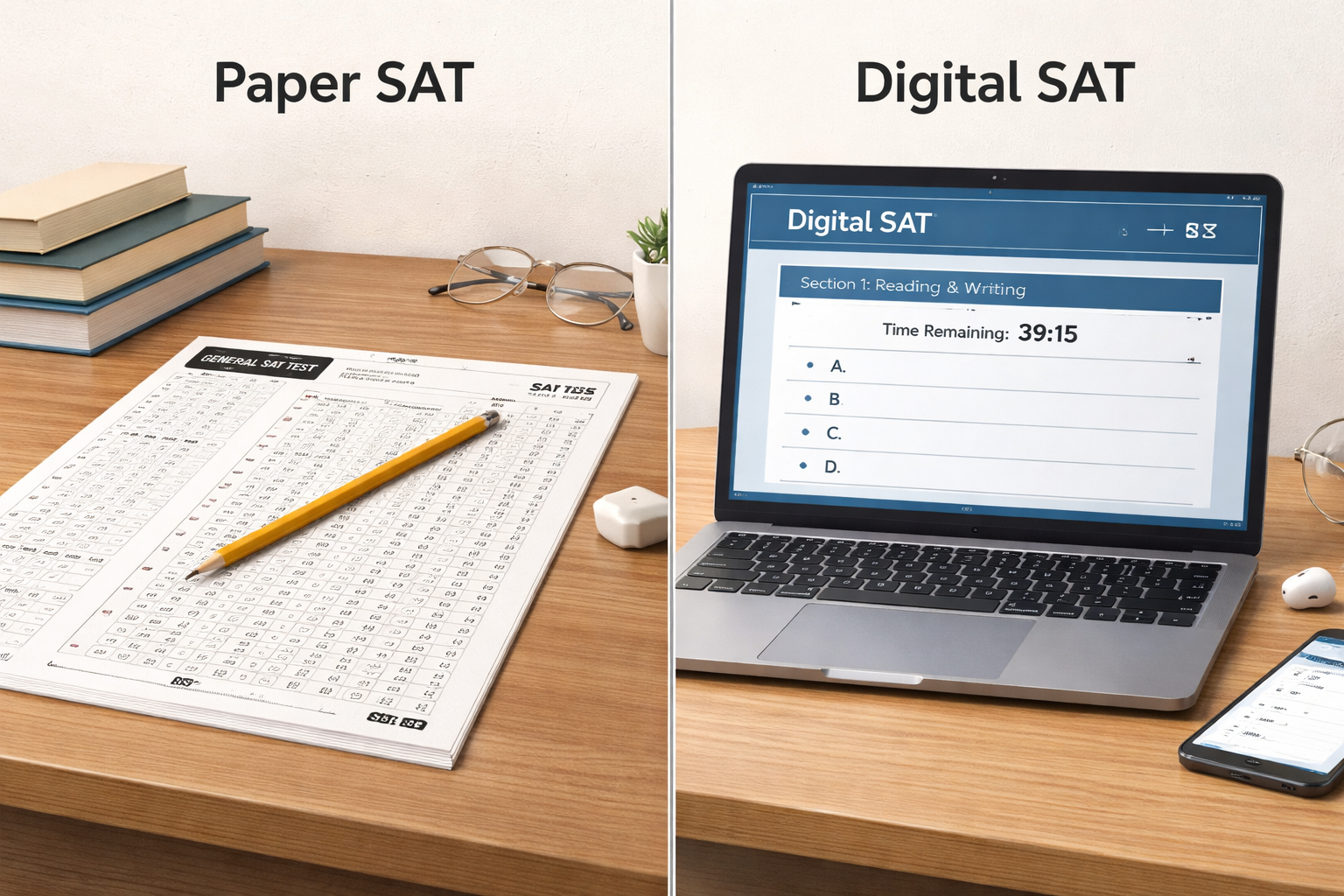
One of the most damaging beliefs parents hold is that the SAT measures innate intelligence. In reality, the exam evaluates learned skills such as reading comprehension, grammar, algebra, and logical reasoning. These are trainable abilities, not fixed traits.
The SAT rewards students who can analyze difficult questions, eliminate incorrect answers, and arrive at the correct answer through reasoning. Students who understand question patterns and apply test taking strategies consistently often outperform peers with higher classroom grades but weaker test skills.
Students who follow a structured test preparation routine especially one built around diagnostics and review, often show greater improvement than students relying on intuition alone. Regular exposure to timed conditions, thoughtful analysis of wrong answers, and targeted practice can significantly raise section scores.
This is why many admissions officers emphasize preparation over perceived intelligence. Consistent, structured test prep helps students from diverse academic backgrounds achieve competitive scores.

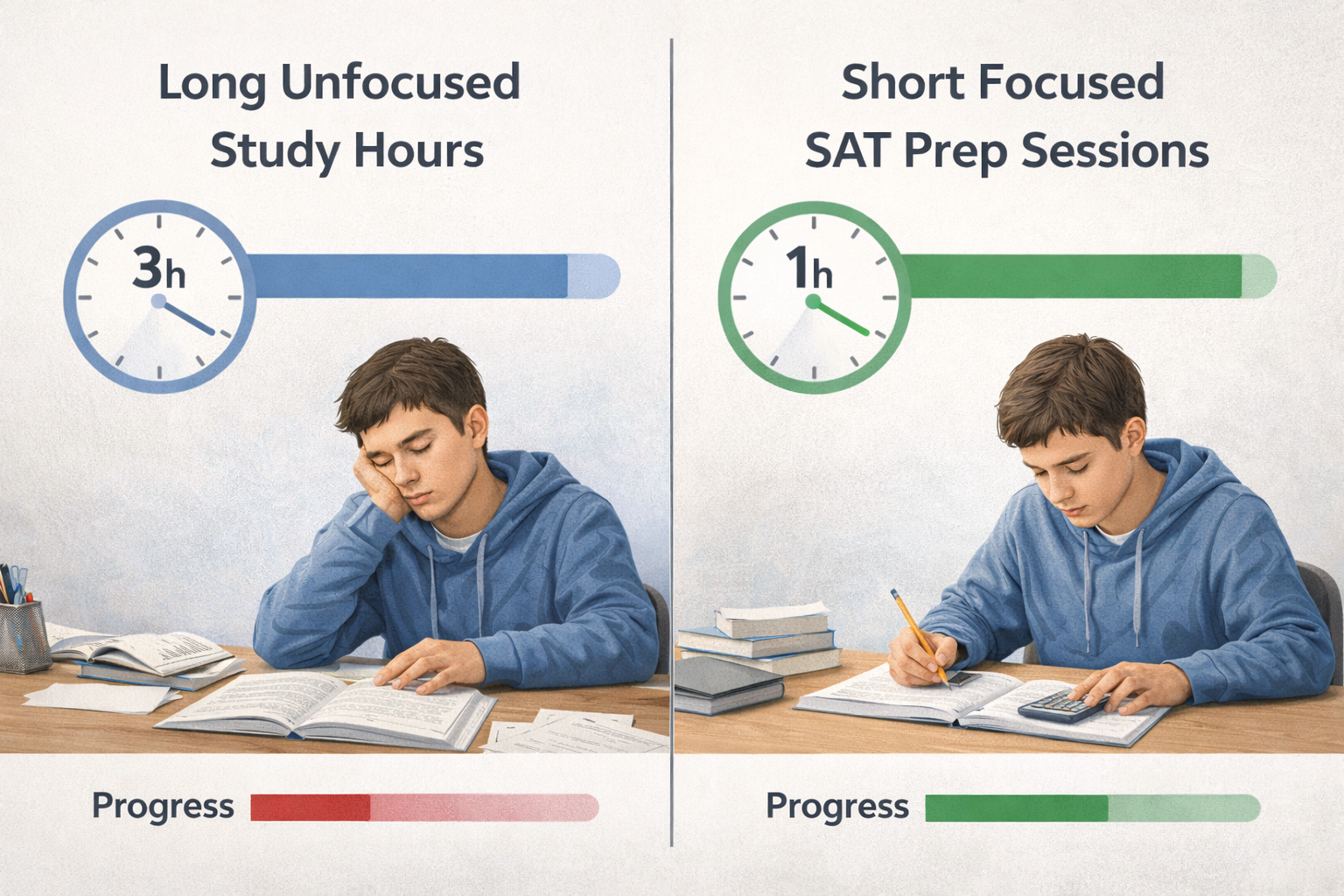
Parents often assume that longer study hours directly translate to higher test scores. In reality, unfocused studying such as passively reading notes or taking repeated full length practice exams without review can stall progress.
Students who repeatedly take practice tests without analyzing errors often repeat the same mistakes. This leads to frustration, burnout, and little improvement, even after spending many hours preparing.
Effective preparation prioritizes quality over quantity. Short, focused sessions that target weak areas and include review of incorrect answers produce better results than long, unfocused study blocks. Strategic taking practice tests, followed by deep analysis of mistakes, builds a deeper understanding of the exam.
This approach improves efficiency, supports effective time management, and leads to steady score gains with fewer total hours.
Waiting until senior year to begin SAT prep often creates unnecessary stress. Early preparation especially during sophomore year or junior year allows students to build skills gradually and avoid cramming close to test day.
Early starters have more time to adjust strategies, retake exams if needed, and strengthen weaker areas without pressure.
For juniors, a longer timeline allows steady improvement through full length practice and skill-building. Seniors, on the other hand, often need highly targeted strategies that focus on efficiency and accuracy. Both approaches work—but only when aligned with the student’s timeline and academic load.

Modern digital SAT preparation is vastly different from early online programs. Today’s platforms use adaptive technology, analytics, and personalized pacing. Many online tools replicate official test conditions more accurately than traditional classrooms.
For busy students balancing school, activities, and family commitments, online prep offers flexibility that in-person classes cannot. Students can study when they’re most focused, revisit lessons, and track progress in real time, often leading to more consistent practice and better outcomes.

Many parents believe that repeatedly taking practice tests is the fastest way to raise SAT scores. While full length practice test exposure is important, improvement does not come from test volume alone. Students often plateau when they move from one exam to the next without reviewing why they missed questions.
Real improvement happens when students carefully analyze wrong answers, understand why an option was incorrect, and learn how to reach the correct answer. Without this reflection, students repeat the same mistakes across full length practice exams, even under timed conditions.
Diagnostics help uncover patterns that raw scores cannot. A diagnostic review shows whether mistakes stem from weak math fundamentals, gaps in critical reading, or flawed time management. This insight allows students to focus on specific skills rather than guessing what to study next.
When diagnostics guide preparation, taking practice tests becomes a strategic tool rather than a repetitive exercise.

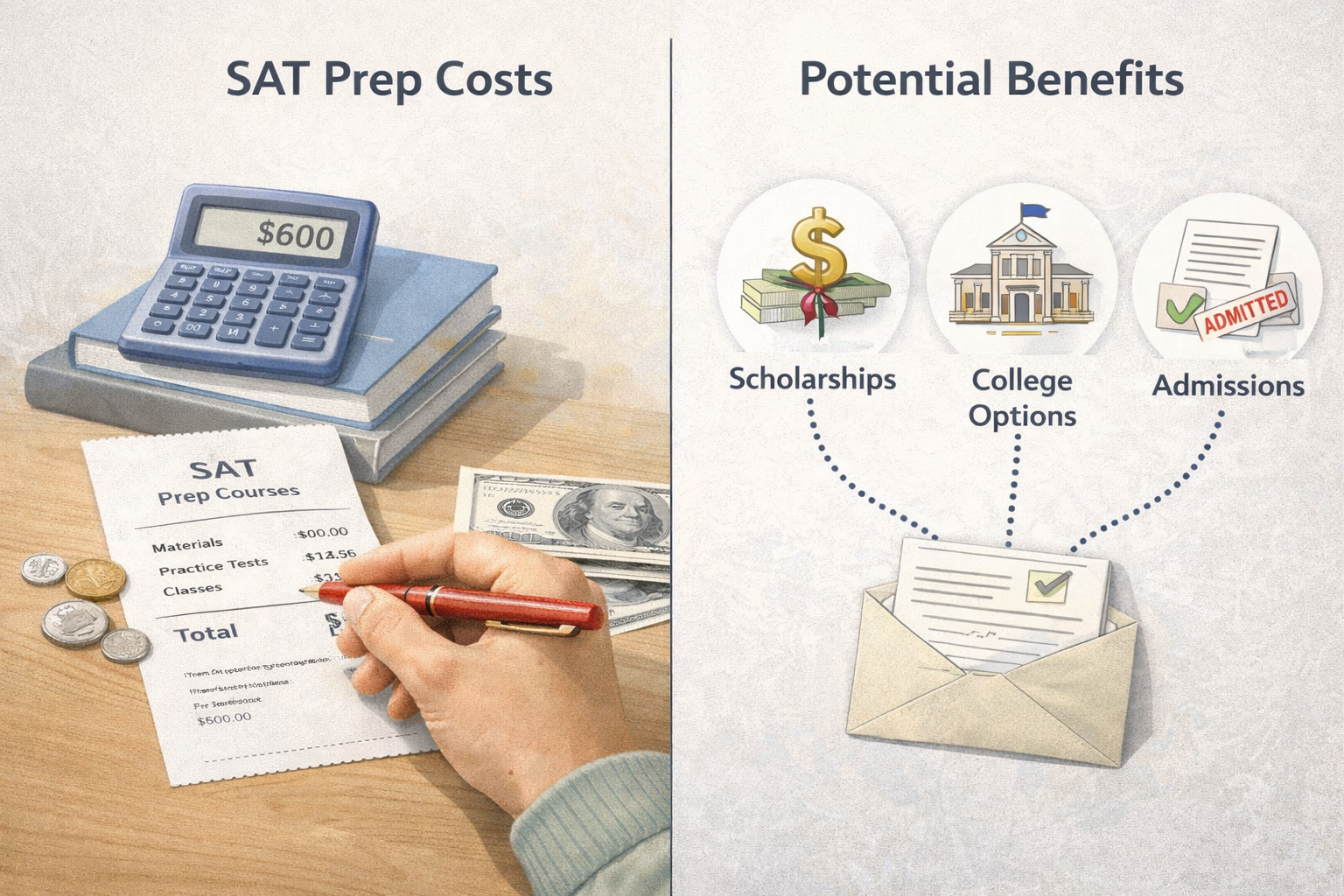
SAT preparation is often viewed as an expense rather than an investment. However, even modest improvements in standardized test scores can unlock scholarships, honors programs, and broader options in higher education. For many families, improved scores directly affect affordability and opportunity.
Compared to the long-term cost of tuition, strategic test prep often delivers meaningful returns through better college applications and stronger placement.
Parents often overlook free or low-cost options such as Khan Academy, official College Board materials, and school-supported programs. When combined with targeted prep support, these resources can yield substantial benefits. Viewed through the lens of the admissions process, prep costs are often small compared to the potential academic and financial advantages.
Rather than chasing myths, parents should encourage a personalized approach. A structured plan that adapts to a student’s strengths, weaknesses, and schedule leads to better outcomes than one-size-fits-all routines.
Consistency matters more than intensity. Short, regular study sessions focused on improvement support steady progress across the SAT test.
SAT prep is as much psychological as academic. Confidence, encouragement, and emotional support directly influence performance. Students who feel supported are more likely to persist, reflect on mistakes, and maintain focus through setbacks.
Parents who encourage students rather than pressure them help build resilience, an asset that extends beyond testing into college life.

Catalyst emphasizes diagnostics over assumptions. Instead of relying on generic schedules, prep begins with a detailed evaluation that identifies how a student approaches the entire test, manages time, and handles challenging questions.
This data-driven approach removes guesswork and allows families to focus on strategies that actually lead to more points.
Through one-on-one mentorship and analytics-driven planning, Catalyst helps families avoid outdated beliefs. Students receive guidance tailored to their academic background, goals, and learning style, ensuring prep remains efficient, targeted, and realistic.
This approach aligns preparation with what test makers and admissions officers actually value.

While not mandatory, many schools are now test optional, SAT prep can still strengthen applications. Strong section scores provide additional data points for admissions decisions, especially at selective institutions. Preparation helps students present their abilities clearly and confidently, supporting broader goals in the college admissions process beyond grades alone.
Yes, when online prep includes personalization, analytics, and feedback. Modern platforms offer adaptive lessons, progress tracking, and targeted review that rival traditional tutoring. When students engage consistently and analyze results thoughtfully, online prep can deliver outcomes comparable to in-person instruction, especially for motivated learners.
The most common mistake is relying on outdated assumptions instead of evidence. Starting too late, focusing only on test volume, or equating high grades with readiness often limits progress. Families who base decisions on data, diagnostics, and skill development give students the best chance to achieve strong results.


